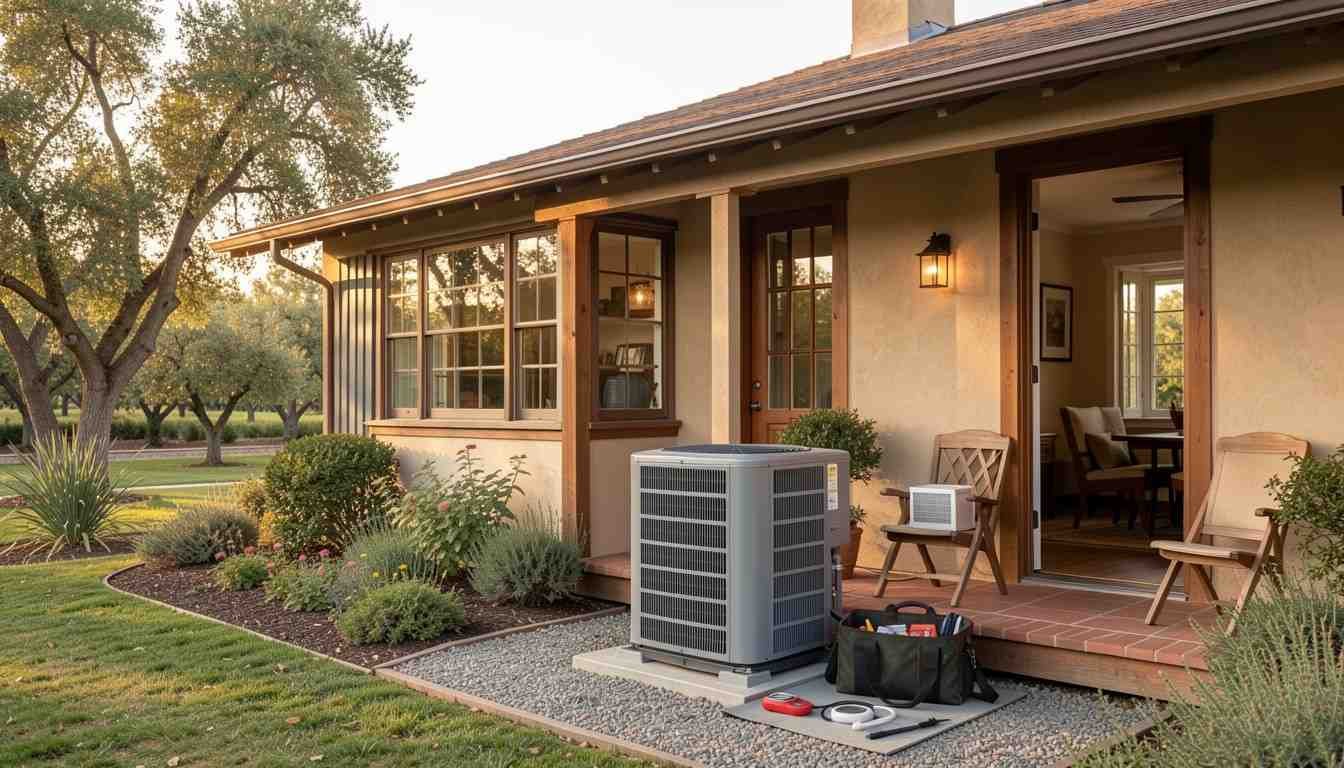
You buy a historic home in Fallbrook for a reason. You want the mature landscaping, the handcrafted details, and the kind of build quality you do not see in new construction. But once you live in an older property, you also learn a hard truth.
Comfort problems do not behave the same way in a historic home.
A modern tract house usually has clear duct runs, consistent insulation, and predictable airflow. A historic Fallbrook home often has plaster walls, limited access points, odd room layouts, and decades of “fixes” layered on top of each other. So if you try a standard HVAC repair approach, you can waste money and still feel uncomfortable.
In this customer spotlight, you will see the steps we used to restore comfort in a historic Fallbrook home without turning it into a construction zone. You will also learn a repeatable checklist you can use in your own home or commercial property.
If you live in an older house, manage a small office, or run a short-term rental in Fallbrook, this will help you prevent expensive mistakes and get better results.
If you want to see who we are and what we service locally, start here: Appliance Repair Fallbrook.
Why this project matters in Fallbrook
Fallbrook sits in a zone where warm days and cool evenings can happen back-to-back. That swing feels great when you are outside. Inside a drafty older home, it can feel like you have two seasons in one day.
Historic homes also have “character features” that fight comfort. You might have tall ceilings, old windows, and a layout that blocks airflow. These features make HVAC sizing and airflow work more important than brand names or fancy thermostats.
In 2026, you also face a practical issue. HVAC equipment is changing due to new refrigerant standards and efficiency rules. If you replace the wrong thing at the wrong time, you can lock yourself into a system that costs more to maintain later. That is why you need a plan before you spend.
The home profile: age, layout, materials, and “historic constraints”
This property had the classic ingredients we see in older Fallbrook homes.
You had thicker interior walls, older framing, and a mix of remodel eras. One part of the home had older construction materials, while another section had newer updates. That combination often creates comfort imbalance, because air leaks, insulation levels, and duct conditions vary from zone to zone.
You also had limited access. Older homes often lack wide attic chases or modern mechanical closets. That matters because you cannot always “just run a bigger duct” or “add another return” without major drywall work.
So we planned the work around three constraints:
- You wanted better comfort without tearing out walls.
- You wanted a solution that looked clean and fit the home’s style.
- You needed a plan that could support residential use and occasional commercial use (home office or guest rental) without constant thermostat fights.
The comfort complaint: what you actually feel
Most comfort problems show up as symptoms. You feel them every day, but the root cause stays hidden.
Here are the complaints that usually show up in a historic home comfort call:
- You feel hot spots in the afternoon, often in the west-facing rooms.
- You feel cold spots at night, especially in rooms far from the air handler.
- You feel weak airflow from some vents.
- You hear loud cycling, meaning the system starts and stops too often.
- You smell dusty air when the unit kicks on, especially after the home sits closed up.
- You see higher bills without better comfort.
The key point is this. If you treat these symptoms one-by-one, you waste money. You need a full baseline inspection first.
Baseline inspection: what we check before we recommend anything
In older homes, you cannot guess. You test, you measure, and then you choose.
Here is the exact order we use because it prevents the most common “replacement regret.”
Step 1: Confirm basic system health
You start with the simple but high-impact checks:
- Thermostat operation and wiring condition
- Filter size, type, and fit (poor fit causes bypass dust)
- Blower performance, wheel cleanliness, and motor amps
- Condenser coil cleanliness and fan condition
- Capacitor readings and contactor condition
- Drain line flow and signs of past overflow
Step 2: Measure airflow and pressure
Comfort equals airflow plus control. In older homes, airflow fails first.
- You check supply temperature split.
- You check static pressure.
- You check for duct leaks at joints and boots.
- You check return air volume and return placement.
Step 3: Identify the “building problems” HVAC cannot fix alone
This is where historic homes differ.
- You check air leakage around doors and old window frames.
- You check attic insulation coverage and gaps.
- You check for blocked or undersized returns.
- You check for closed-off rooms that starve return air.
Once you do this, the solution becomes obvious. Without this step, you can replace equipment and still feel uncomfortable.
What makes historic homes different (and why standard fixes fail)
A modern home often needs “mechanical repair.” A historic home often needs “system design correction.”
Here are the common reasons standard fixes fail in older Fallbrook homes.
Lath-and-plaster walls and limited chases
If you have plaster walls, you cannot casually cut and patch like drywall. That means you must plan routes carefully. You often use existing chases, closets, or discreet line-set paths.
Electrical capacity limits
Older properties can have older panels, odd circuits, or limited spare capacity. If you install a new high-efficiency heat pump system without checking electrical readiness, you can create nuisance breaker trips or unsafe wiring conditions.
Air leakage and pressure imbalance
Historic homes leak air. That is normal. The problem is when the HVAC system creates pressure issues.
- Too little return air creates negative pressure.
- Negative pressure pulls in dusty attic air or crawlspace air.
- That dust loads your coil and your blower and reduces efficiency.
Mixed-use needs (residential plus light commercial)
If you use part of the home as a studio, office, or rental, you need stable temperatures and predictable run times. You also need noise control. A loud system can hurt sleep quality and business use.
Diagnosis findings: the real root causes
In this project, the issues were not “one broken part.” The system had stacked problems.
Here are the root causes we often find:
- Duct leakage in the attic at key joints
- Weak return air path that caused airflow starvation
- A system that short-cycled due to sizing mismatch and thermostat placement
- Dirty coils and a tired capacitor that reduced performance under heat load
- Room layout changes from past remodel work that no longer matched the duct design
If you fix only the capacitor, the comfort still fails. If you replace the system without fixing duct leakage, the new system still runs too hard. That is why we used a layered plan.
The 2026 retrofit strategy: preserve character, improve performance
In a historic home, the best plan usually has three levels:
- Repair-first fixes that restore performance fast.
- Low-impact upgrades that reduce the building’s comfort load.
- Replacement only when numbers and reliability justify it.
This approach also helps commercial users. If you run a small office in the home, you want minimum downtime and predictable costs.
Solution path A: repair-first (what we fixed without major changes)
You can often reclaim a surprising amount of comfort by correcting airflow and restoring basic performance.
Restore airflow and clean heat transfer surfaces
- We cleaned the indoor blower wheel and verified airflow settings.
- We cleaned the outdoor condenser coil using a safe method that protects fins.
- We confirmed the correct filter size and sealed bypass gaps so dust could not sneak around the filter.
If your outdoor unit sits near trees or landscaping, you can prevent repeat problems by following these steps from our guide on protecting outdoor HVAC units from local wildlife and debris.
Stabilize electrical start components
- We tested the run capacitor and replaced it if it showed weakness.
- We inspected the contactor for pitting and replaced it if it showed burn marks.
- We verified tight electrical connections to reduce heat buildup at terminals.
Fix drain and safety issues
- We flushed the drain line and verified proper slope.
- We checked overflow protection so a clogged drain would not flood the ceiling.
These steps matter because older homes often run systems harder. If your system already runs on the edge, small electrical weaknesses cause bigger failures in summer.
Solution path B: low-impact upgrades that respect historic features
Once the system worked correctly, we focused on upgrades that did not damage the home’s character.
Ductless mini-splits for tricky zones
Historic homes often have one or two rooms that never cooperate. They might be an addition, a sunroom, or a back office. If you try to force comfort there through existing ducts, you often steal airflow from the rest of the house.
A ductless mini-split helps because:
- You add comfort without opening walls for duct runs.
- You get room-by-room control, which helps both residential and commercial use.
- You reduce strain on the main system during peak heat.
Placement matters. You avoid blowing air directly at a bed or desk. You also plan the line-set route to stay discreet. Good placement makes the system feel like it belongs in the home.
Smart thermostat and zoning that actually works
A smart thermostat helps only if the system and ductwork can support it. In older homes, thermostat placement often causes bad cycling.
- If the thermostat sits in a cool hallway, the bedrooms can roast.
- If the thermostat sits in a warm kitchen, the rest of the home can freeze.
In many cases, zoning solves this. If you have a two-story historic home or a split layout, zoning stops the one-thermostat war. It also supports mixed commercial use, because you can keep the office area comfortable without overcooling the living space.
Noise and vibration control
Older framing can amplify vibration. We often use:
- Proper pad isolation for outdoor units
- Secure line-set mounting that avoids rattles
- Return grille checks to stop whistling
These small details matter in historic homes because you notice sound more in quiet, heavy-walled structures.
Solution path C: full HVAC replacement in 2026 (if needed)
Sometimes replacement is the best move. In 2026, you should also think about future serviceability.
SEER2 and real-world comfort
A higher-efficiency system can cut operating cost, but only if the duct system is tight and airflow is correct. Otherwise, the efficiency rating stays on paper while you keep paying high bills.
Heat pump vs gas vs dual fuel
For Fallbrook, heat pumps often work well because winters are mild. For mixed residential and light commercial use, dual fuel can make sense if you want gas backup on colder nights or for specific operating schedules.
The key is sizing. A historic home needs proper load calculation. A like-for-like swap can cause short cycling, noise, and poor humidity control.
If you also care about long-term durability in coastal and inland microclimates, see our guide on the best brands of appliances for coastal and inland California homes.
Commercial comfort notes (if the property has business use)
If the home includes an office, studio, or small retail use, you need:
- Stable temperatures across work hours
- Quiet operation for calls and client visits
- Easy maintenance access for filters and drain lines
- Better indoor air quality during smoke season
Ductless systems help here because they provide steady comfort in one area without forcing the whole building to run at high output.
Indoor air quality for historic homes
Indoor air quality is not a luxury anymore. In California, smoke season changes the rules.
Here is the actionable IAQ plan we recommend for older homes:
- Use a filter level that balances capture and airflow (many homes do best with MERV 8 to 11).
- Replace filters after heavy smoke events, even if they look okay.
- Clean coils on schedule because ash and dust reduce heat transfer.
- Seal return leaks so the system does not pull attic dust into the air stream.
If you also have hard water issues, you should handle that too. Scale reduces water heater efficiency and can impact comfort and operations in kitchens and laundry rooms. Start with our guide on how Fallbrook’s hard water damages appliances (and how to fix it).
Financials: what costs what and where people overspend
Historic homes can be expensive, but the right order of work controls cost.
Here is the pattern we see:
- You overspend when you replace equipment before fixing airflow.
- You overspend when you chase comfort with a bigger system.
- You overspend when you install high-end gear on leaky ducts.
The best financial approach is:
- Fix airflow and duct leakage first.
- Add targeted comfort for problem rooms next.
- Replace equipment last, with proper sizing.
If you also want to reduce peak-hour energy costs, learn how to shift loads during Flex Alerts and energy grid alerts.
What worked, what didn’t (lessons from the project)
What worked:
- We treated the home like a system, not a machine.
- We solved airflow first, then controls.
- We used low-impact upgrades instead of demolition.
What did not work in the past (and you should avoid):
- Past quick fixes that ignored return air problems
- Oversized equipment installed to “be safe”
- Cheap filters that let dust load the coil and reduce performance
Maintenance plan for longevity (seasonal checklist)
Use this simple schedule to keep a historic home comfortable and protect your investment.
Monthly (10 minutes)
- Replace or inspect the HVAC filter.
- Walk around the outdoor unit and clear a 2-foot zone of leaves and weeds.
- Check for new rattles or airflow changes.
Spring (before the first heatwave)
- Clean the outdoor coil using a gentle hose.
- Test the thermostat and verify proper cycling.
- Schedule a tune-up if the system struggles at startup.
After smoke events
- Replace the filter immediately.
- Rinse the outdoor coil to remove ash residue.
Annually
- Inspect duct connections and return paths.
- Verify drain line flow and overflow safety.
- Check capacitor health and electrical connections.
How to get similar results at your property
If you own a historic Fallbrook home, or you manage a mixed-use property, start with two steps:
- Walk room to room at 3 PM and 8 PM. Write down the temperature differences and the rooms that feel wrong.
- Check airflow. If one room has weak airflow, you likely have a duct or return problem.
If you want help, Appliance Repair Fallbrook can inspect your HVAC system, identify root causes, and recommend the lowest-impact path to comfort. If you are ready to schedule service, use our contact page to request an appointment.