Your old refrigerator finally quits. Your dryer takes two cycles to finish. Your office breakroom dishwasher leaks again. At that point, you have two goals.
You want the appliance out of your way fast. You also want to get rid of it the right way.
In Fallbrook, appliance disposal is not just “throw it on the curb.” Major appliances contain metal that recyclers can recover, and some appliances also contain refrigerants or components that need proper handling. If you manage a business, you may also need a clean paper trail for disposal.
This guide walks you through local recycling options near Fallbrook, how to prepare each appliance, what mistakes cause turnaways, and when repair makes more sense than recycling.
If you need a second opinion before you haul something away, start here: Appliance Repair Fallbrook.
Why appliance recycling matters in Fallbrook in 2026
When you recycle an appliance, you keep bulky waste out of the landfill stream and help recover reusable materials like steel and copper. You also reduce illegal dumping risk, which often spikes during move-outs and remodel seasons.
In North County, one of the most direct options is the local transfer facility that accepts bulky items. EDCO’s Fallbrook Recycling & Transfer promotes itself as an alternative to taking waste to the landfill, and it accepts trash, recyclables, and bulky items, with the note that it does not accept “toxics.”
For electronics, proper recycling matters because many devices contain hazardous materials like lead, mercury, and cadmium, and certified partners help handle these responsibly.
What counts as an “old appliance” (and what is treated differently)
Before you load your truck, sort your items into the right categories. This prevents wasted trips.
Major appliances (usually metal-heavy)
- Refrigerators and freezers
- Washers and dryers
- Dishwashers
- Ranges, ovens, and cooktops
- Water heaters (often treated as scrap metal)
Appliances that overlap with e-waste
- Microwaves
- Compact appliances with control boards
- Smart appliances with Wi-Fi modules
Straight e-waste (often handled separately)
- TVs, computers, printers, monitors, batteries, and phones
Why it matters: transfer stations often accept bulky items, while e-waste programs focus on items with screens, batteries, or data storage.
Your 2026 options in Fallbrook: drop-off vs pickup
You basically have two paths.
Option A: Drop-off at a local recycling and transfer facility
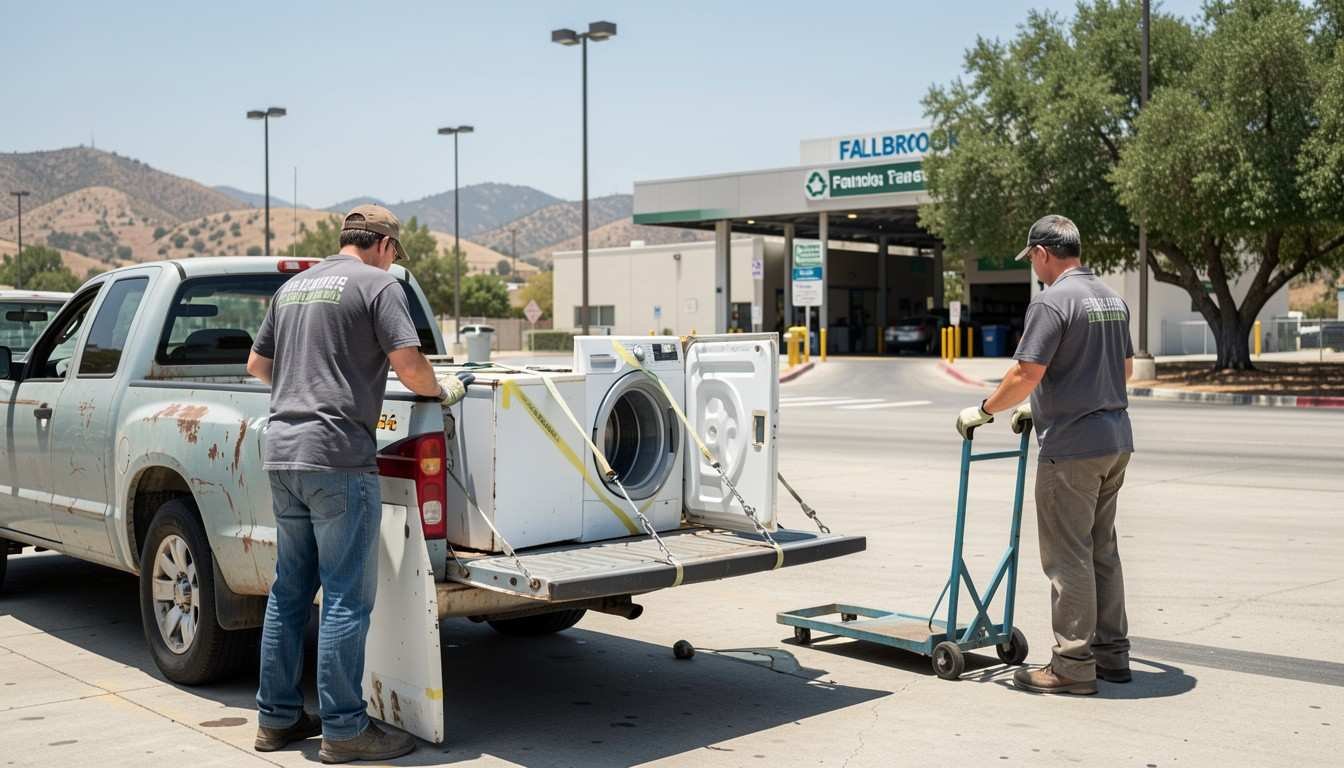
This is usually the fastest option if you can transport the item safely. EDCO’s Fallbrook Recycling & Transfer is set up for North County residents and businesses to bring trash, recyclables, and bulky items.
Option B: Pickup or haul-away service
This is useful if:
- You cannot lift heavy appliances.
- You manage a commercial property with multiple units.
- You want fast removal without renting a truck.
If you use pickup, ask two questions before you book:
- “Do you recycle the metal and handle refrigerants correctly?”
- “Will you provide a receipt or disposal confirmation?”
Local option #1: Fallbrook Recycling & Transfer (EDCO)
If you want a local, well-known option to drop off bulky items, EDCO’s facility is the most direct mention tied specifically to Fallbrook.
EDCO states that Fallbrook Recycling & Transfer accepts trash, recyclables, and bulky items, and it also notes “sorry, no toxics.” It lists public waste disposal hours as Monday through Saturday, 7:00 a.m. to 4:30 p.m., and it also notes holiday exceptions.
It also lists a Buyback Recycling Center with Wednesday through Saturday hours, and it accepts CRV containers and other donation-value items.
- Address: 550 W. Aviation Rd., Fallbrook, CA
- Phone: (760) 728-6114
Action step that saves you time: call ahead and describe the exact appliance type, especially for refrigerators and freezers, since those can involve refrigerant handling requirements.
Local option #2: E-waste recycling help near Fallbrook
If your “appliance” includes screens, batteries, or storage, treat it like electronics recycling.
The Recycle Guide explains that electronics can contain hazardous materials such as lead, mercury, and cadmium, and it promotes recycling to keep these substances out of landfills and recover valuable materials. It also emphasizes data protection, recommending that you wipe devices using factory reset or data-wiping software before recycling.
For business owners, this is the key point. If an office printer, computer, or smart device goes out, you must protect data before you dispose of it.
How to prepare appliances for recycling (so you do not get turned away)
Preparation is the difference between a smooth drop-off and a wasted trip.
Refrigerators and freezers
- Empty everything.
- Defrost it fully, and towel-dry the interior.
- Tape the doors shut for transport.
- Keep the unit upright to avoid oil migration issues.
If you are not sure whether to recycle or repair a fridge, check your unit’s age and symptoms first. If it is under 8 years old and the compressor still runs, repair may be cheaper than replacement.
If you want guidance on equipment choices that tend to hold up better in coastal and inland conditions, see our guide on best appliance brands for coastal and inland California homes.
Washers and dishwashers
- Turn off water supply valves.
- Disconnect hoses carefully, then drain them into a bucket.
- Tape hoses to the appliance so they do not swing during transport.
- Leave the door cracked open overnight to prevent mildew smell.
Dryers
- Disconnect the vent duct.
- Clean lint around the exhaust port.
- If it is gas, cap the gas line and confirm a safe disconnect before moving.
Ranges and ovens
- For electric, unplug and secure the cord.
- For gas, shut off gas and disconnect safely.
- Remove loose grates to prevent damage in the vehicle.
Commercial appliances
If you are disposing of appliances from a restaurant or breakroom, you should:
- Document model and serial numbers before removal.
- Take photos for your asset log.
- Keep disposal receipts for property records.
Fees, rebates, and cost drivers in 2026
Costs depend on two things: transportation and handling.
Drop-off costs
Transfer stations may charge based on load size, material type, or weight. Always verify current pricing before you drive over, because fees change.
Pickup costs
Pickup pricing changes based on:
- Stairs and difficult access
- Distance and travel time
- Appliance type and size
- Same-day urgency
If you manage multiple properties, schedule pickups in batches. It lowers per-item cost and reduces downtime.
What works and what doesn’t (avoid these mistakes)
What works
- Call ahead and confirm the facility accepts your item type.
- Remove food, water, and loose parts before transport.
- Bring help for heavy items, and use a dolly and moving straps.
- Schedule drop-off early in the day so you avoid long lines.
What doesn’t
- Showing up with prohibited “toxics,” which EDCO notes it does not accept.
- Dragging appliances across floors without protection, which creates property damage.
- Cutting refrigerant lines yourself. Leave refrigerant handling to pros.
Residential vs commercial disposal (property managers and small businesses)
Residential disposal usually involves one unit at a time. Commercial disposal often involves bulk, access coordination, and tenant communication.
If you manage an office or retail space:
- Plan removal during off-hours.
- Confirm loading dock access.
- Label breakers and shutoffs if equipment is hardwired.
- Keep your disposal receipts for compliance and internal accounting.
If your commercial site also relies on HVAC during a disposal or remodel window, plan for airflow and comfort because dust and debris can hurt equipment quickly. You can use our guide on preparing your HVAC system for Santa Ana winds to keep the system protected during windy periods.
When repair beats recycling (quick decision checklist)
Before you recycle, run this checklist. It will save you money.
Repair often makes sense when
- The unit is under 8 years old.
- The failure is a common part like a belt, latch, drain pump, igniter, or capacitor.
- The cabinet is in good condition and parts are available.
Recycling often makes sense when
- The unit is 12 to 15+ years old and has multiple failures.
- The compressor failed on an older refrigerator.
- The tub or transmission failed on an older washer.
- Rust or corrosion is severe.
If you want a real-world example of how we help customers decide between repair and replacement, read our case study: Customer spotlight: restoring comfort to a historic Fallbrook home.
How Appliance Repair Fallbrook helps (without being pushy)
If you are stuck deciding whether to repair or recycle, you do not need a sales pitch. You need clarity.
Appliance Repair Fallbrook can:
- Diagnose the failure and give you a straightforward repair estimate.
- Tell you when a repair is a poor investment.
- Help you plan a replacement timeline so you do not get forced into a panic buy.
If you want to book a diagnostic or ask a quick question first, use our contact page.