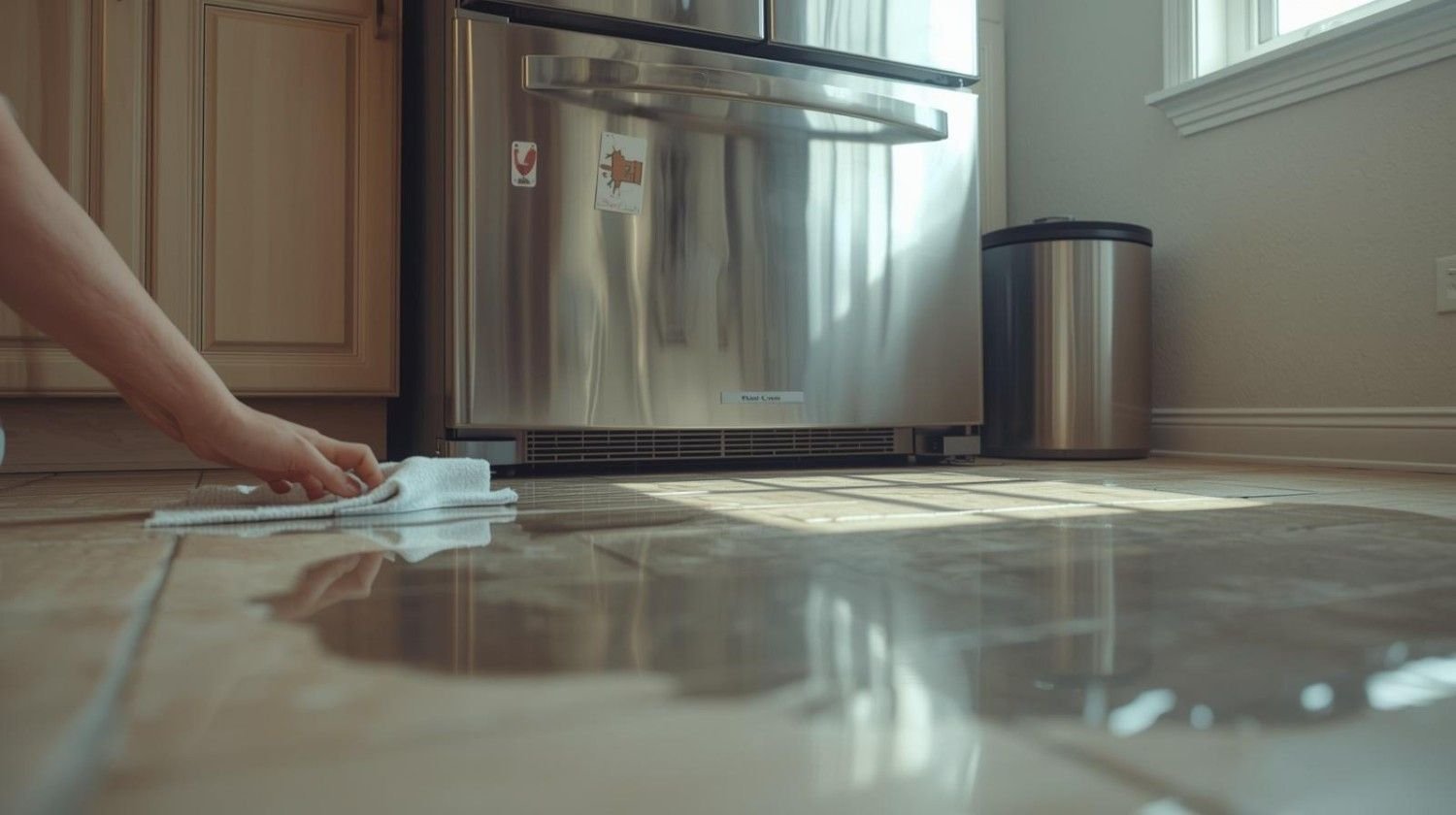
You walk into the kitchen and feel it before you see it. Your sock hits a cold, wet spot near the refrigerator. You look down and see a small puddle on the floor. You wipe it up and hope it was a one-time thing. The next day, it is back.
A leaking refrigerator feels minor at first, but it can cause real damage. Water seeping under vinyl, laminate, or wood can swell boards, stain baseboards, and feed mold. In Southern California, where many homes have plank flooring and open layouts, a slow leak can travel farther than you expect.
The good news is this. Most refrigerator leaks come from a short list of causes. If you understand those causes and follow a simple step-by-step process, you can often identify the problem and prevent serious damage. In some cases, you can fix it yourself. In other cases, calling a local appliance repair company like Appliance Repair Fallbrook saves you time, stress, and a bigger repair later.
This guide walks you through the five most common reasons a refrigerator leaks water, how to diagnose each one, and what to do next.
Why you should not ignore a leaking fridge
A small puddle may not look serious, but repeated leaks can:
- Damage flooring and subfloor.
- Stain or warp baseboards and cabinet kick plates.
- Promote mold growth behind or under the fridge.
- Cause electrical safety issues if water reaches outlets or wiring.
In San Diego County, water restoration companies often trace kitchen water damage back to refrigerator water line failures or slow leaks that went unnoticed. If you catch the issue now, you protect both your home and the appliance.
Let’s start with the most common cause.
Cause #1: Clogged defrost drain
Most modern frost-free refrigerators and freezers use an automatic defrost system. The system melts frost from the evaporator coils. The meltwater flows through a small defrost drain hole and into a drain pan near the bottom of the fridge, where it evaporates.
When that defrost drain clogs, the water has nowhere to go. It backs up, freezes, or overflows into the fridge and sometimes onto the floor.
Signs your defrost drain is clogged
You may notice:
- A sheet of ice on the floor of the freezer.
- Water dripping into the fresh food section from the back wall.
- Puddles inside the fridge under drawers.
- Water slowly appearing in front of the fridge, even when no one used the dispenser.
These are classic defrost drain symptoms.
Why the drain clogs
Common reasons include:
- Food debris or crumbs falling into the drain.
- Ice buildup in and around the drain hole.
- Algae or slime growth in the drain tube over time.
How to safely clear a defrost drain
If you feel comfortable with basic DIY:
- Unplug the refrigerator. Safety first.
- Empty the affected area. Remove bottom drawers or bins to access the back.
- Locate the drain hole. In many models, it sits at the back of the freezer floor or behind a rear panel.
- Remove visible ice. Use a plastic tool or your fingers, not a knife or metal object.
- Flush the drain. Use a turkey baster or squeeze bottle with warm (not boiling) water to flush the drain hole gently. Some guides suggest adding a small amount of mild soap or baking soda solution.
- Confirm flow. Watch for water reaching the drain pan under the fridge.
If the drain repeatedly re-freezes or clogs again, the problem may involve a failed drain heater or a deeper design issue. At that point, it is smart to have a technician inspect it. Persistent drain problems are one of the most common reasons people call for professional refrigerator repair.
Cause #2: Drain pan problems
Under your refrigerator, there is usually a drain pan. The defrost water drips into this pan, and the heat from the compressor and condenser fan helps it evaporate. In normal operation, you never see this water on your floor.
However, you can get leaks if the:
- Pan cracks.
- Pan is misaligned and not catching the water.
- Pan overfills because of another issue.
Signs of drain pan issues
You might see:
- Slow, recurring puddles near the front or sides of the fridge.
- Water under the refrigerator but a dry interior.
- More leaking after long run times (hot days, heavy use).
How to check the drain pan
- Unplug the fridge.
- Gently pull the fridge forward. Protect your floor with a piece of cardboard or a moving mat.
- Locate the pan. It is usually accessible from the back or front near the bottom.
- Inspect for cracks. Look for visible splits or brittle plastic.
- Check alignment. Make sure the pan sits correctly under the drain tube.
If the pan is dirty, you can clean it with mild soap and water. If it is cracked, replacement is usually the best fix. A cracked pan will continue to leak, and no amount of patching will match a proper replacement.
Cause #3: Water supply line or inlet valve leak
If your refrigerator has an ice maker or water dispenser, it connects to your home’s water supply through a small water line and inlet valve. These parts are common leak sources.
Why water lines leak
Leaks often come from:
- Loose compression fittings.
- Kinked or crushed plastic tubing.
- Old, brittle tubing that cracks.
- A damaged or corroded inlet valve.
In Southern California homes, we also see water damage when installers use low-quality saddle valves or unprotected plastic lines that run behind cabinets or under floors. When those fail, the leak can be continuous and serious.
Signs of a supply line or valve leak
You might notice:
- Water pooling behind the refrigerator.
- Puddles that reappear even when the fridge has not run a cooling cycle.
- Visible dripping from the line or valve when you pull the fridge out.
Immediate steps if you suspect a water line leak
- Turn off the water supply. Locate the shutoff valve, often under the sink, in the basement, or behind the fridge, and turn it off.
- Unplug the refrigerator.
- Pull the fridge out carefully.
- Inspect the line and valve. Look for drips, wetness, or mineral tracks on the tubing or valve.
If the leak is at a fitting, tightening may help temporarily. If the tubing is cracked or the valve is corroded, it is better to replace those parts the right way.
Water line leaks can cause significant kitchen damage, especially under cabinets or flooring. If you are unsure about cutting and flaring lines or replacing a valve, treat this as a pro-level job.
If you also deal with hard water in Fallbrook, mineral buildup can accelerate wear on ice maker valves and filters. Our guide on how Fallbrook’s hard water damages appliances (and how to fix it) explains how water quality quietly shortens appliance life.
Cause #4: Door gasket and condensation issues
Your refrigerator door gasket (the rubber seal) keeps warm room air out and cool air in. When the gasket fails, warm humid air enters the fridge. That extra moisture condenses on cold surfaces and can drip onto shelves and down to the bottom, where it may leak out.
Signs of a door seal problem
You might see:
- Moisture or “sweating” along the inside edges of the door.
- Condensation or droplets forming on interior walls near the door.
- Frost build-up around the door frame or near vents.
- The door not closing smoothly or popping open.
How to check the door gasket
Use the simple dollar bill test:
- Close the door on a dollar bill so that part of the bill sticks out.
- Gently pull the bill.
- If it slides out easily without resistance, the seal is weak in that spot.
Repeat this along different sections of the gasket.
Also look for:
- Visible cracks or tears.
- Warps or sections that do not sit flat.
- Dirt, grease, or debris jammed in the folds.
How to fix condensation and gasket issues
You can:
- Clean the gasket with warm water and mild soap.
- Dry it thoroughly.
- Apply a small amount of food-safe lubricant if the gasket sticks.
If the gasket is torn, warped, or hardened, replacement is the long-term fix. A bad seal also makes the compressor run longer, which wastes energy and shortens the refrigerator’s life.
Cause #5: Leveling and overloading problems
Refrigerators are designed to drain water and manage airflow under specific conditions. If the unit is not level or if the interior is overpacked, you can see unexpected leaks.
Why leveling matters
If the fridge tilts too far forward or sideways, defrost water may:
- Pool in one corner instead of flowing correctly to the drain.
- Drip out where it should not.
- Leave water on door tracks or thresholds.
Most manufacturers recommend the refrigerator be nearly level side to side and slightly tilted back so doors close on their own.
How to check and adjust leveling
- Place a level on the top front edge of the fridge.
- Check side to side. Adjust front legs or rollers until the bubble is centered.
- Check front to back. Adjust so the fridge is very slightly higher in front than in back.
- Test door closing. Open the door halfway. It should close by itself, not swing open.
Why overloading matters
When you pack the fridge or freezer too tightly, you can:
- Block air vents.
- Force air to move in strange patterns.
- Prevent cold air from reaching defrost water areas.
- Create localized frost and ice build-up.
This build-up may eventually melt and cause intermittent leaks. Keeping some space around vents and not stacking items directly against the back wall helps the appliance work as designed.
Bonus: Southern California factors that affect leaks
Your location matters. In Southern California and areas like Fallbrook, you deal with:
- Hard water that leaves mineral deposits on valves and filters.
- Occasional humidity spikes that can boost condensation.
- Flooring types that do not tolerate repeated moisture well.
Hard water can clog water inlet valves or degrade lines over time. Our hard water guide explains how to reduce that risk and protect not just fridges but also dishwashers and water heaters.
Power events and Flex Alerts also influence how often your fridge cycles. If you change usage patterns during grid events, you might notice different run times. Our guide on managing appliance use during Flex Alerts explains how to stay efficient without sacrificing safety.
DIY vs professional help: how far you should go
You can safely handle some checks yourself. Others are better left to an appliance repair technician.
Good DIY tasks
- Wiping up water quickly and monitoring if it returns.
- Inspecting and cleaning the door gasket.
- Checking if the fridge is level and adjusting feet.
- Clearing minor defrost drain clogs with warm water, if you can access the drain.
- Pulling the fridge out to visually inspect the drain pan and water line, as long as you protect your floor.
Jobs that need a professional
You should call a pro if:
- The leak continues after you clear the defrost drain.
- You suspect a water supply line or valve leak and are not comfortable replacing them.
- You see electrical issues, burning smells, or frequent breaker trips.
- The refrigerator is built-in or very heavy and hard to move safely.
- You notice repeated leaks that appear in different spots, which could indicate a combination of problems.
In the home appliance repair service market, refrigerator repair is a major segment because the units are expensive to replace and essential to daily life. Getting an accurate diagnosis from a local appliance repair expert like Appliance Repair Fallbrook can prevent you from replacing a fridge that still has plenty of life left.
Preventive checklist: how to stop future leaks
You do not need to wait for a puddle to appear. You can reduce the risk of leaks with a simple maintenance routine.
Every 3 months
- Inspect the door gaskets for debris, cracks, or loose spots.
- Confirm the fridge is level and doors close properly.
- Look inside for frost patches or unusual condensation.
- Listen for new noises or longer run times.
Every 6–12 months
- Check the defrost drain for signs of ice or blockage and gently clear if needed.
- Inspect the drain pan for cracks or overflow.
- Replace the water filter on schedule, or at least once or twice per year, to maintain proper flow and pressure.
- Inspect the water supply line for kinks, wear, or corrosion at fittings.
If you ever decide to replace a fridge that has had repeated leaks, make sure you dispose of the old unit correctly. Our guide on local recycling centers for old appliances in Fallbrook shows how to do that the right way.
How Appliance Repair Fallbrook can help
As a Southern California appliance and HVAC repair company, we see refrigerator leaks every week. Sometimes the fix is simple. Sometimes it needs deeper work. Our job is to:
- Find the real cause.
- Explain your options clearly.
- Help you decide whether to repair or plan for replacement.
We also help you spot related risks. For example, if your kitchen fridge has a water line leak and your home has an older HVAC setup, we may suggest a quick look at nearby HVAC equipment or electrical panels to ensure water did not reach them.
If you want a local team that already understands Fallbrook conditions, check our overview at Appliance Repair Fallbrook or reach out through the contact page to schedule a refrigerator leak inspection.