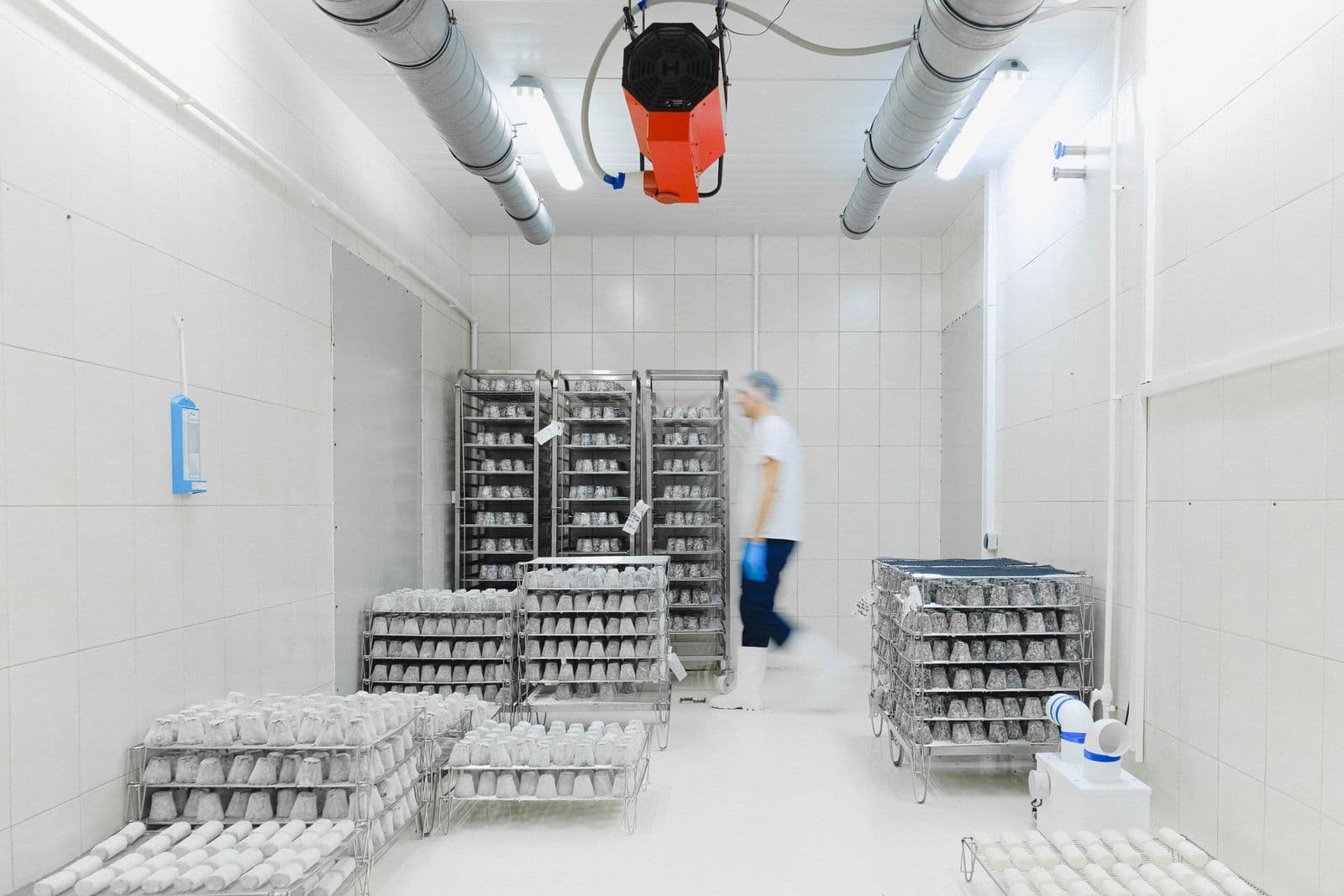
Bonsall and the surrounding hills are avocado country, and dozens of small groves and packing operations run commercial refrigeration that most people never see: a walk-in cooler beside the packing shed, a reach-in or two in the barn, sometimes an ice machine. This equipment works harder and in rougher conditions than its restaurant equivalents, and it is often the single most expensive thing to fail on a grove property, because when it fails the fruit inside it is at risk. This guide covers how grove refrigeration differs from restaurant refrigeration, what to inspect and when, door seals, defrost systems, and the particular problem that well water poses for ice production.
Why grove refrigeration requires different maintenance than restaurant
A restaurant walk-in lives indoors, holds a steady load, and is opened and closed all day by people who are trained to close it. A grove walk-in lives in a shed or barn, sits idle for months and then runs flat out through harvest, and is loaded with bins of warm fruit that have been sitting in the sun. Those differences change the maintenance.
Load pattern. Post-harvest cooling is about pulling field heat out of fruit quickly and holding it at the right temperature. A walk-in that is filled with warm avocados has to remove far more heat in the first hours than a restaurant cooler sees in a week, and it has to do it repeatedly through the season. Compressors on grove coolers run longer cycles under higher loads, which is why condenser condition and refrigerant charge matter more than they do in a kitchen.
Environment. The condenser on a grove walk-in is breathing the air of a working agricultural property: fine grove dust, pollen, leaf litter, and in packing sheds, cardboard fibre. A condenser coil that would stay serviceable for a year in a restaurant can be half blocked within a harvest season here, and a blocked condenser raises head pressure, lengthens run times, and shortens compressor life. Summer ambient temperatures in a Bonsall shed can exceed what the unit was designed for, which compounds the problem.
Seasonality. Months of idleness followed by weeks of continuous operation is hard on equipment. Seals dry out, fan bearings seize, and refrigerant leaks that were slow and invisible in idle months become obvious the first hot day of harvest, which is the worst possible time to discover them.
Water and cleaning. Grove coolers are hosed out, often with untreated well water, and the evaporator fins and drain pan see minerals that a restaurant unit on municipal water never does.
The practical consequence is that grove refrigeration needs a pre-harvest inspection every year without fail, more frequent condenser cleaning during the season, and an eye on the door, which on a grove property is being opened by whoever is carrying a bin.
Compressor and condenser inspection schedule
The compressor is the expensive part, and almost everything that kills it early is preventable with attention to the condenser and the refrigerant charge.
Monthly during harvest, by the grower. Clean the condenser coil. With the unit off, brush the fins in the direction they run and blow or vacuum the dust out from the inside face outwards. Check that the condenser fan runs and that nothing is stacked against the condensing unit blocking its airflow. Listen for a compressor that is running continuously or short-cycling, and look at the thermometer: a cooler that is struggling to reach set point with a clean coil needs a technician.
Quarterly, by a technician. Each visit covers condenser coil cleaning to the fin base; refrigerant charge verification against the unit's specification, since a low charge means a leak and a high head pressure means a condenser or fan problem; condenser and evaporator fan motor operation and bearing condition; compressor amperage draw against nameplate; electrical connections, contactors, and the start components; the evaporator coil and drain pan; the defrost system, covered below; and door seals. The visit also identifies components approaching end of life, so that a fan motor with a noisy bearing is replaced in February rather than failing in a July heatwave. One of the four visits should fall in the weeks before harvest.
Annually. A full inspection of the refrigerant circuit for leaks, including the line set between the condensing unit and the evaporator, which on grove installations often runs outdoors and is vulnerable to sun, animals, and equipment. Sealed system repairs, refrigerant recovery, and recharge are performed with EPA 608 certification.
Reach-in coolers from True, Turbo Air, Beverage-Air, Continental, and Delfield follow the same schedule on a smaller scale; their condensers are usually at floor level and clog fastest of all.
Door seal and gasket maintenance
The door gasket is the cheapest component on a walk-in and the one most often responsible for expensive problems. A gasket that no longer seals lets warm, humid air into the box continuously. The cooler runs longer to hold temperature, the extra moisture freezes on the evaporator, airflow drops, and the compressor runs more still. On a grove property, where the door is opened by people with their hands full and closed by whoever notices, the gasket also takes physical abuse that a kitchen door does not.
Weekly, by the grower. Close the door on a sheet of paper at several points around the frame; if it pulls out easily, the gasket is not sealing there. Look for tears, flattened sections, and gaps at the corners. Check that the door closes fully on its own, that the closer or cam-lift hinges work, and that the sweep at the bottom contacts the threshold. Wipe the gasket with warm soapy water, never with solvents, which harden the rubber.
Quarterly, by a technician. Gasket condition and fit, hinge and closer adjustment, the door's alignment in its frame, the heater wire around the frame on freezers, and the threshold. Replace a gasket that has hardened or torn; the part is inexpensive relative to the compressor run time it is costing.
During harvest. The door is the biggest variable. Strip curtains inside the door opening cut the warm air exchange during loading dramatically and are worth fitting on any walk-in that is loaded repeatedly through the day. Loading the cooler in batches rather than bin by bin, and keeping the door closed between batches, protects the compressor more than any maintenance visit can.
Defrost system considerations for walk-ins
A walk-in cooler's evaporator runs below freezing even when the box is held above it, so moisture from the air and from the fruit freezes on the coil. The defrost system melts that ice periodically; when it fails, ice builds until the coil is blocked, the cooler cannot hold temperature, and the compressor runs continuously against a load it cannot satisfy.
Coolers above freezing often use off-cycle defrost, where the evaporator fan runs with the compressor off and air alone melts the frost. Freezers and some coolers use electric defrost, with heaters in the coil controlled by a timer and a termination thermostat. Either way, three components fail: the timer or control that initiates defrost, the heater on electric systems, and the termination thermostat that ends it. The symptoms are the same: a coil that is a block of ice, water in the box as it thaws unevenly, and rising temperatures.
On a grove property the defrost system has two additional enemies. The first is the door, as above: every warm, humid air exchange adds moisture the defrost system has to deal with, and a failing gasket can overwhelm a defrost system that is working perfectly. The second is the idle season. A defrost timer that sat unpowered for six months, or a heater that corroded in a damp shed, is discovered on the first hot loading day. The pre-harvest inspection tests the defrost cycle end to end for exactly that reason, and the quarterly visit checks defrost timing, heater resistance, and that the drain line from the evaporator pan is clear and heated where it needs to be, so the melt water leaves the box rather than refreezing in the pan.
Water treatment for ice machines on grove properties
Many grove and packing operations run a commercial ice machine, for workers, for cooling, or for sales, and most Bonsall properties run it on private well water. Commercial ice machines process a great deal more water than a residential ice maker, so the well water damage pattern that afflicts household refrigerators runs on a compressed timeline: scale in the water lines and on the evaporator plate, corroded inlet valves, fouled ice-thickness sensors, and a progressive drop in production. Without water treatment, service call frequency on well water is two to three times higher than with it. Scotsman, Manitowoc, Hoshizaki, and Ice-O-Matic machines are all within scope, and all behave this way on untreated water.
The recommendation for commercial ice production on a well is dedicated treatment for the machine, sized for its throughput: a sediment pre-filter and a reverse osmosis or scale-inhibiting stage on the ice machine's own supply, rather than relying on whatever whole-house equipment the residence has. Payback across reduced service calls and extended equipment life is typically under two years for a machine that runs through the season. The same well water is also what gets hosed onto walk-in evaporator fins during cleaning, and corrosion of the aluminium fins is accelerated on well-served properties; using treated water for cleaning, or at least rinsing with it, slows that.
The broader well water story for the residence, the three tiers of treatment, and the payback arithmetic are covered under well water appliance service; for the household refrigerator rather than the walk-in, see refrigerator repair.
For grove walk-ins, reach-ins, and ice machines on Bonsall, De Luz, Rainbow, and rural Fallbrook properties, commercial appliance repair calls received before 2 pm get priority dispatch, with Bonsall commercial and grower operations typically reached in 60 to 90 minutes. Loss of refrigeration with fruit at risk is treated as an emergency and dispatched the same day regardless of the time received. The commercial diagnostic is $135, applied to the repair, labour is $135 per hour minimum, and preventive maintenance contracts are priced per piece of equipment with quarterly visits and reduced diagnostic fees on any additional calls. Call (951) 717-8971 and identify the call as commercial at the outset so it is routed for priority; Bonsall grove properties are a regular run.