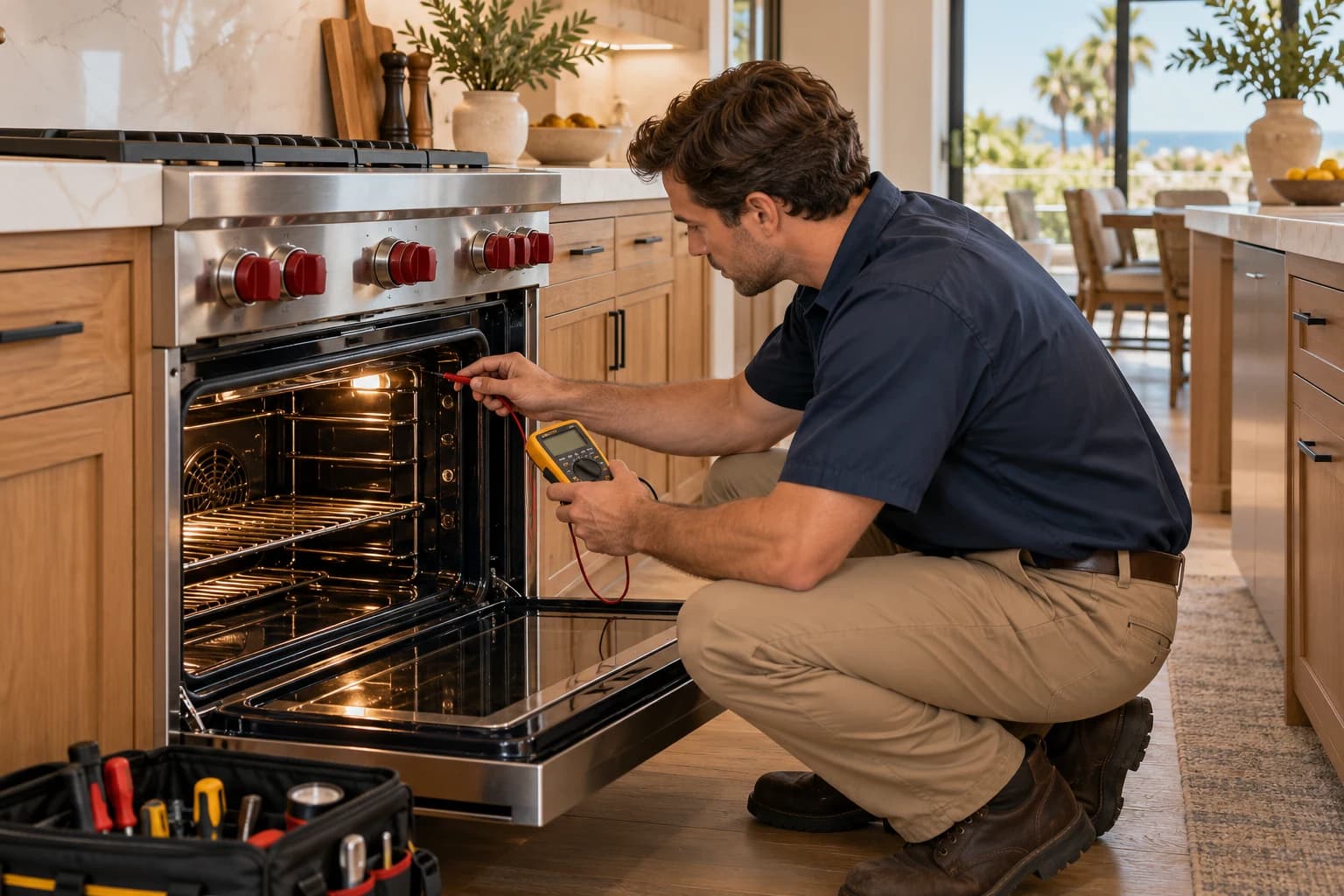
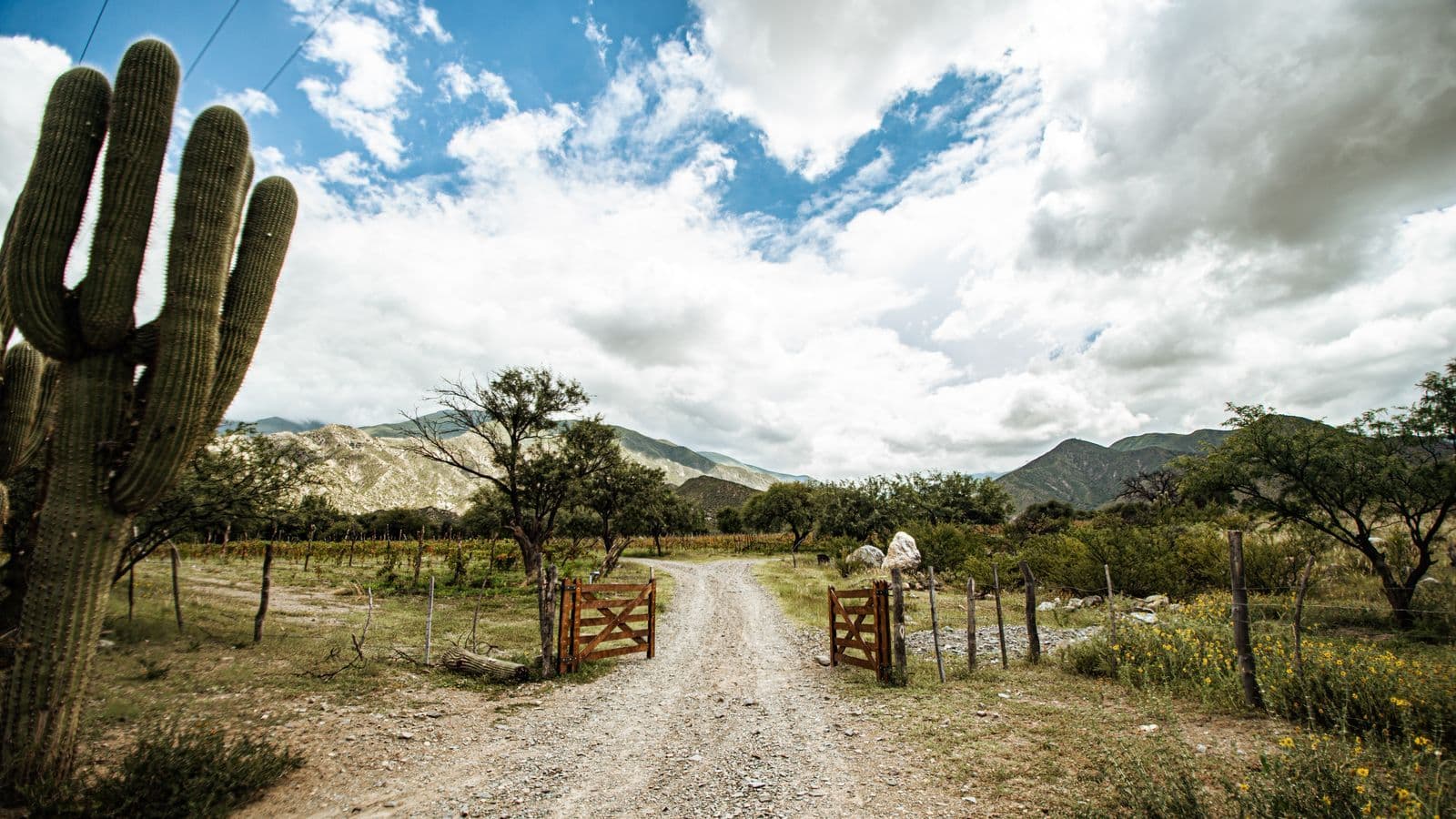
De Luz is one of the most rural places in North County San Diego: large lots in the hills north-west of Fallbrook, private wells, propane tanks, long driveways, and a good share of roads that stop being paved before they reach the house. Appliance service there is a different proposition from a call in a Fallbrook subdivision, and residents who understand how it works get faster, cheaper, and more accurate service. This article sets out what makes De Luz different, how scheduling and travel windows work, the rough-road surcharge, how to prepare for a visit, and the two issues, well water and propane, that account for most of what goes wrong with De Luz appliances.
What makes De Luz service different
Three things set De Luz apart from the suburban calls most appliance services are built around.
Distance and access. De Luz properties are typically a long drive from anywhere a service vehicle starts its day, the last part of that drive is often dirt or gravel, driveways can be long and unmarked, and GPS is unreliable in the canyons. A technician who turns up without the right part is not coming back in twenty minutes. That changes the economics of every call: the diagnosis has to be right the first time, and the vehicle has to carry what the property is likely to need, which is only possible if the office knows what the property is like before the technician leaves.
The water. Nearly every De Luz home is on a private well, and well water damages ice makers, dishwashers, washing machines, and water heaters in ways that look like ordinary mechanical failure. Some De Luz wells also carry hydrogen sulphide, the rotten egg smell, which corrodes the copper and brass inside appliances faster still. A technician used to municipal water replaces parts that were working; the appliance fails the same way again; the customer pays twice and waits twice.
The fuel. Natural gas is not available in De Luz. Dryers, ranges, water heaters, and often generators run on propane from a tank on the property, and propane appliances have different orifices, regulators, valve components, and ignition behaviour from their natural gas equivalents. Generalist technicians who have only worked on natural gas misdiagnose them.
Add the rest of rural life, chest freezers in barns and outbuildings running in summer heat they were never rated for, walk-in coolers on grove properties, vintage appliances in older ranch houses that are worth keeping, and De Luz service becomes a specialty rather than a longer version of a town call. The De Luz service area page summarises the coverage; this article is about how to get the most from it.
Scheduling realities and travel windows
Honest expectations about timing are worth more than optimistic ones. Standard De Luz calls are typically 90 minutes to 2 hours from dispatch during business hours, Monday to Saturday, 8 am to 5 pm. Calls received before 11 am get first-morning dispatch where that is possible, but next-day scheduling is sometimes needed depending on where the technician is and what else is booked. Freezer and refrigerator emergencies, where food is at risk, get same-day priority regardless.
Behind those numbers is how a rural route works. De Luz calls are grouped with Bonsall, Rainbow, and other rural Fallbrook calls on the same day wherever possible, because one trip into the hills that covers three properties serves all three better than three separate trips. That is why a De Luz call booked on Tuesday may be offered a Wednesday morning window when a Bonsall call is already going out that way, and why advance scheduling is encouraged: a non-urgent appliance booked a few days ahead is almost always served faster, in practice, than one that needs the next available slot.
Two things help the office help you. First, say where the property actually is: the nearest cross road, the gate, the landmark, and whether the last stretch is paved. Second, be reachable on the day; a technician who cannot find the driveway and cannot raise the customer may have to move on to the next call and come back, which costs everyone.
Rough-road access and surcharge policy
Some De Luz, Bonsall, and Rainbow properties are down roads that most service vehicles avoid. Appliance Repair Fallbrook runs a four-wheel-drive service vehicle so that access is not an issue, and applies a $30 rough-road surcharge for properties beyond paved roads, added to the $89 diagnostic fee.
The policy is deliberately simple. "Beyond paved roads" means the last stretch to the house is dirt or gravel, whether that is a county road or a private drive. The surcharge is stated at scheduling, when you book, not announced at the door, and it is the same whether the road is a quarter mile or three. It is a flat contribution to the vehicle and the time that access takes; it does not change the flat-rate quote for the repair, the $89 diagnostic that is waived if you proceed with the repair, or the 90-day parts and labour warranty.
If you are not sure whether your property qualifies, describe the road when you book and the office will tell you. If conditions have changed, a washout, a locked gate, a road that is impassable after rain, say so; the technician would rather know before leaving than find out at the bottom of the hill.
Preparing for a service call on a rural property
A little preparation on the customer's side makes a De Luz visit more likely to be finished in one trip.
Give directions, not just an address. The nearest paved road, the turn, the gate code or who opens it, which building the appliance is in, and whether a phone has signal at the house. If the driveway forks, say which way.
Say what the property is. Well water or municipal, propane or electric for the dryer and range, paved or dirt access. Each of these changes what the technician brings. A propane dryer call with propane-rated igniters and valve coils on the vehicle is a same-visit repair; without them it is two trips.
Describe the fault specifically. "The washer fills slowly" points at a clogged inlet screen on a well property; "the dryer runs but does not heat, worse in the morning" points at propane supply. The model number, usually on a plate inside the door or on the back, lets parts be checked before dispatch.
Mention everything. If the ice maker has also been slow and the dishwasher has been leaving film, say so. Looking at a second appliance on a visit that is already on the property is far cheaper than another trip, and on a well property the faults are often related.
Clear the way. Move what is stacked in front of the dryer in the barn, make sure the pressure tank and the water shutoffs are reachable, and put the dogs somewhere.
Have the water in mind. If the well has been tested, have the results handy. If it has not, expect the technician to ask about the water first on any water-using appliance, and expect a recommendation to test it.
Decide who can say yes. The diagnostic ends with a flat-rate quote and no work starts without approval, so whoever is on site needs to be able to give it.
Common De Luz appliance issues: well water + propane
Most De Luz service calls come down to one of two local realities, and knowing which one you are likely looking at helps.
Well water. On untreated well water, washer inlet valve screens clog with sediment from around year 2 to 3, inlet valve solenoids corrode around year 5 to 7, and front-load drum bearings wear early. Refrigerator ice makers follow a cascade, water line, then inlet valve, then module, with the first component typically failing around year 4 to 5 instead of 7 to 8 on municipal supply. Dishwasher spray arms scale and cleaning performance drops by year 3 to 4. Water heaters fill with sediment. Where the well carries hydrogen sulphide, the copper and brass inside every water-using appliance corrodes on top of all that, and black staining in the dishwasher or at the dispenser is the sign. The diagnostic on any well-served De Luz call starts with water quality, inspects the water path before any part is discussed, and includes neutral guidance on the three tiers of treatment if asked; the full framework is under well water appliance service. A whole-house softener, $1,500 to $3,500 installed, typically pays back in 3 to 5 years on a De Luz property.
Propane. A propane dryer that runs cold, a range burner that lights weakly, an oven that takes forever to heat: on a De Luz property the first question is the tank gauge, then the regulators, then pressure at the appliance, before the igniter or valve coil is blamed. Low tank pressure, especially on cold mornings, produces symptoms identical to appliance faults. When the fault is in the appliance, the parts have to be propane-rated, and the common ones are stocked. Repair costs are the same as natural gas: igniters $180 to $320, valve coils $150 to $250. The dryer repair page covers the propane specifics.
Around those two, the De Luz list is familiar: chest freezers in barns and garages stressed by summer heat they were not rated for, grove walk-in coolers with dusty condensers, vintage ranch-house appliances that are mechanically simple and worth repairing, and generators that are somebody else's trade. Every repair carries a 90-day parts and labour warranty, parts for common brands ride on the vehicle, and the technician who diagnoses the fault is the one who fixes it and comes back if it recurs.
To book a De Luz call, phone (951) 717-8971 with directions, the appliance and model, whether the property is on well water, whether the appliance is propane, and whether the road is paved, and ask for the earliest grouped window. Same-day service for calls before 11 am where the schedule allows; emergencies with food at risk get priority.