Propane ranges are common on Bonsall estates, De Luz ranches, and rural Fallbrook properties where natural gas is not available, and the single most common propane range repair is a failed igniter. It is a straightforward job for a technician who knows propane and a frustrating one for anyone who does not, because several other faults produce the same symptom. This guide explains how propane igniters differ from natural gas, how to tell an igniter failure from the look-alikes, where propane-rated parts come from, what the replacement involves, and why it is not a repair to do yourself.
Why propane igniters differ from natural gas
A gas range has two ignition systems. The surface burners use spark igniters: a small ceramic-insulated electrode next to each burner that clicks a spark across to the burner cap when you turn the knob. The oven and broiler use a glow-bar igniter: a silicon carbide element wired in series with the oven's safety valve, which heats until it draws enough current to open the valve, at which point gas flows and lights off the glowing bar.
The igniters themselves are often physically identical across fuels. What differs is everything around them. Propane is delivered to the range at about 10 to 11 inches of water column, roughly double the pressure of natural gas, and carries about two and a half times the energy per cubic foot, so every burner has a smaller orifice and the pressure regulator on the range is set, or fitted with a propane insert, for the higher pressure. A range that was built for natural gas and converted to propane carries a kit of these parts, and the conversion instructions specify flame adjustment afterwards.
The result is that ignition on a propane range is tuned to a narrower window. A slightly weak glow bar that would still light natural gas may not light propane reliably. A surface burner with a mis-sized orifice produces a lazy flame that the spark struggles to catch. And because the supply is a tank and two regulators in the yard rather than a utility main, a pressure problem upstream can mimic an igniter fault perfectly. That is the context for the diagnosis below. The Propane Education and Research Council publishes general guidance on propane appliances; the manufacturer's conversion documentation for the specific range is the authority on the parts.
Diagnosing igniter failure vs other causes
Four things cause a propane range to fail to light, and they are separated in a fixed order.
Tank level and pressure. First, always. A tank below about 20 percent, especially in cold weather, cannot vaporise propane fast enough to hold pressure under load. The oven igniter glows, the valve may even open, and the flame is weak or does not catch. If the other propane appliances on the property are also struggling, the supply is the problem. The diagnostic verifies tank level and checks pressure at the range before parts are discussed.
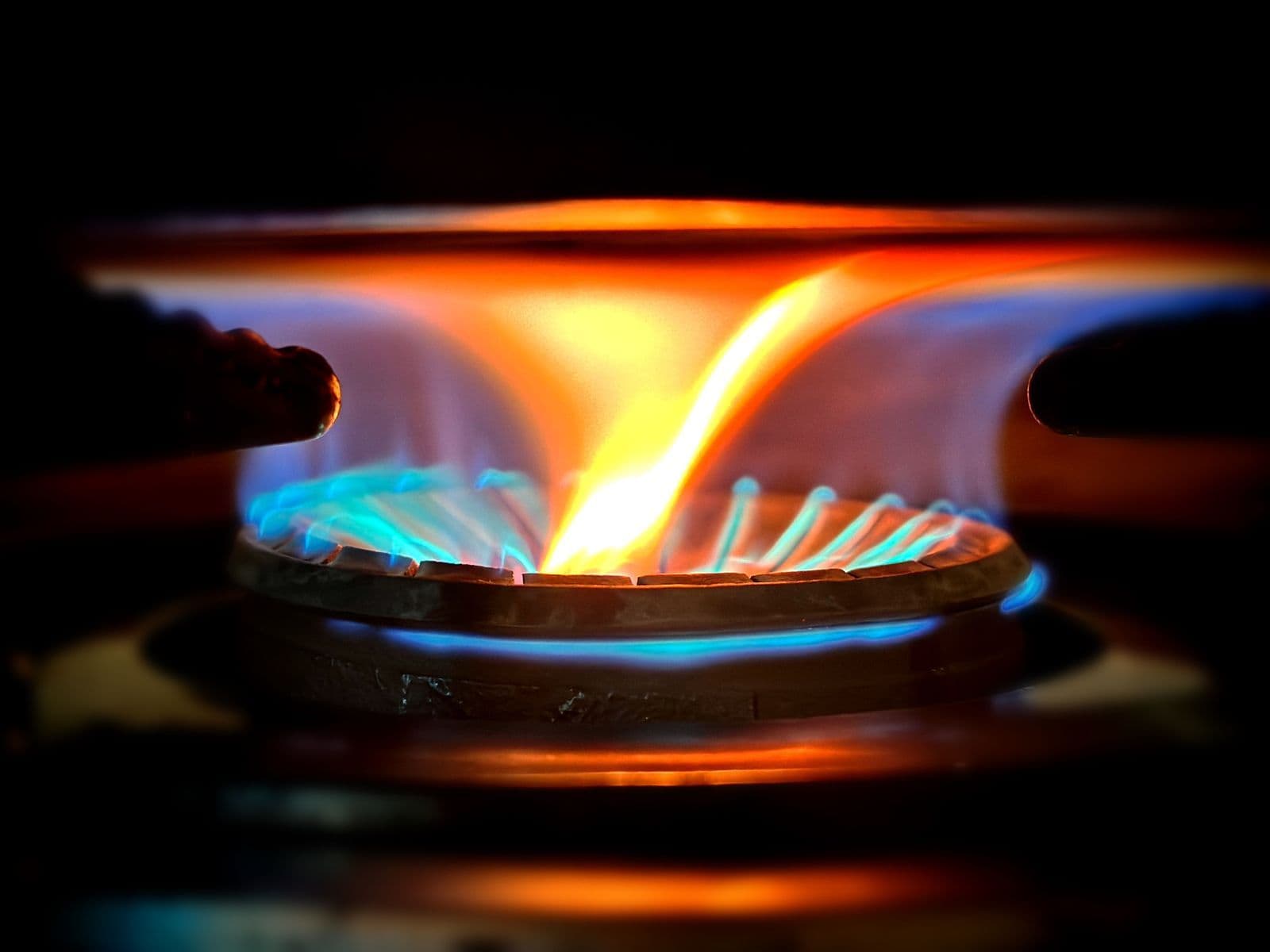
Regulator. A failing second-stage regulator near the house, or a range regulator with the wrong insert after a conversion, produces intermittent lighting, a lazy yellow flame, or burners that light and then die back. The flame tells the story to a technician who knows what a correct propane flame looks like: tight, blue, with distinct inner cones.
The igniter. On the oven, the definitive test is current draw. A glow bar in good condition draws a specified current, typically in the range of 3 to 4 amps depending on the model, and the safety valve opens at that threshold. A weakening igniter glows, sometimes brightly, but draws less, so the valve never opens: the "glows but no flame" symptom. Measuring the draw separates a bad igniter from a bad valve without replacing either. On the cooktop, a spark igniter that clicks continuously, clicks at the wrong burner, or does not click at all is usually a cracked insulator, a wet or greasy electrode, or a failed spark module.
The valve. If the igniter draws its rated current and the oven still does not light, the safety valve is the fault, and that is a different, more expensive part at $150 to $250 for a propane-rated valve.
Two more look-alikes are worth naming. A blocked burner cap or a cap seated crooked after cleaning will stop a surface burner lighting and is a homeowner check. And a tripped thermal fuse after a self-clean cycle can leave the oven dead in a way that resembles ignition failure. The full set of oven and range faults, with costs, is on the oven and range repair page.
Finding propane-rated replacement igniters
For the glow-bar igniter itself, the part is usually common to the natural gas and propane versions of a model, and the correct part is found by the range's full model number, which is on a plate inside the oven door frame, behind the storage drawer, or on the back. Universal flat and round igniters exist and fit many ovens, but they vary in current draw, and an igniter with the wrong draw either will not open the valve or will stress it. Appliance Repair Fallbrook uses manufacturer or manufacturer-approved igniters matched to the model.
Where propane-specific parts matter is the rest of the system. If the diagnosis reaches the valve, the regulator, or the orifices, the propane-rated versions are different part numbers from the natural gas versions, and a generalist's vehicle stocked for the coast will not carry them. Propane-rated range parts for Whirlpool, Maytag, KitchenAid, GE, Samsung, LG, Frigidaire, and older Kenmore are sourced through the authorised distributor network, typically within 24 to 72 hours when they are not already on the vehicle. Say the range is propane when booking so the right parts come out on the first visit.
Avoid two things. First, generic igniters sold without a current specification. Second, any part advertised as natural gas with a note that it "works on propane too" unless the manufacturer's conversion documentation for your model says so.
Replacement procedure overview
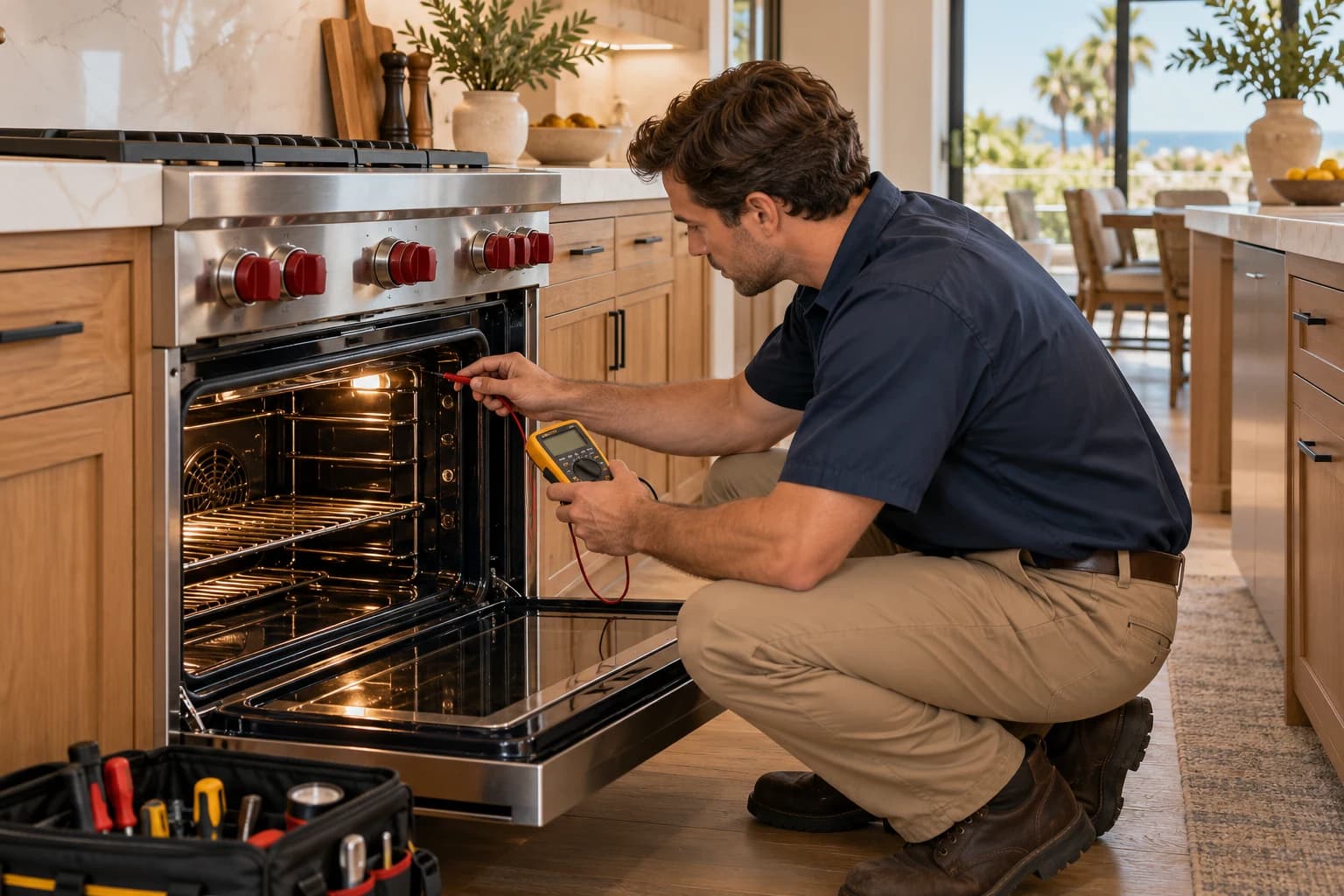
For the oven igniter, the work runs roughly as follows. The gas supply to the range is shut off and the range is unplugged. The oven racks and the bottom panel come out, then the burner baffle, exposing the bake burner tube and the igniter mounted beside it. The igniter's two wires are disconnected at their ceramic plug, the two screws holding the bracket are removed, and the old igniter comes out. The new igniter is handled by the bracket only, because the silicon carbide element is brittle and the oils on skin shorten its life. It is mounted, connected, and the oven reassembled. The gas is restored, the connection is leak-tested, the oven is run through a heat cycle, and the technician watches the lighting sequence: glow, valve open, clean light-off within the expected number of seconds, and a correct propane flame along the full burner tube.
For a surface spark igniter, the burner cap and head come off, the cooktop is lifted or the burner assembly accessed from below, the electrode is replaced and its gap to the burner set, and each burner is checked for a clean spark and immediate light. If a spark module is at fault, it is replaced and all burners re-tested.
The replacement itself is 30 to 60 minutes. The diagnostic that precedes it is 20 to 40 minutes, and on a propane range it includes the tank and pressure check and a look at the flame on every burner, because an igniter that failed early sometimes failed for a reason upstream. Oven igniter replacement runs $180 to $320 including labour; a surface burner igniter $120 to $220. Every repair carries a 90-day parts and labour warranty.
Why this is not a safe DIY repair
The igniter swap looks simple on video, and on a natural gas range in town it is close to it. On a propane range on a rural property, four things make it a job for a technician.
The fuel. Propane is heavier than air, so a small leak from a disturbed fitting pools at floor level rather than dispersing, and a range sits in a kitchen with pilot-less electronic ignition and often a propane water heater nearby. A leak test with the right equipment after any gas-side work is not optional.
The diagnosis. Without measuring igniter current, checking supply pressure, and reading the flame, a homeowner is guessing between four causes that look the same. The common outcome is a new igniter fitted to a range with a low tank or a failing regulator, and the symptom returns on the next cold morning. The second common outcome is a universal igniter with the wrong draw, which either never opens the valve or holds it open against a weak glow and lets unburned gas into the oven before light-off, which is a flash hazard.
The parts. Propane-rated valves, orifices, and regulator inserts are specific, and fitting a natural gas part because it was in stock produces an oversized, sooting flame and carbon monoxide.
The property. In Fallbrook's dry climate, with vegetation close to many rural homes, the consequences of a gas-side mistake are larger than in a suburb.
The diagnostic is $89, waived with repair, with a $30 rough-road surcharge for properties beyond paved roads. Propane range and oven diagnostics include gas supply and pressure verification and a tank level check on every call. If a propane range on a Fallbrook, Bonsall, or De Luz property will not light, turn the burner off, make sure there is no gas smell, and call (951) 717-8971. If you do smell gas, leave the burner off, ventilate the room, and call from outside.