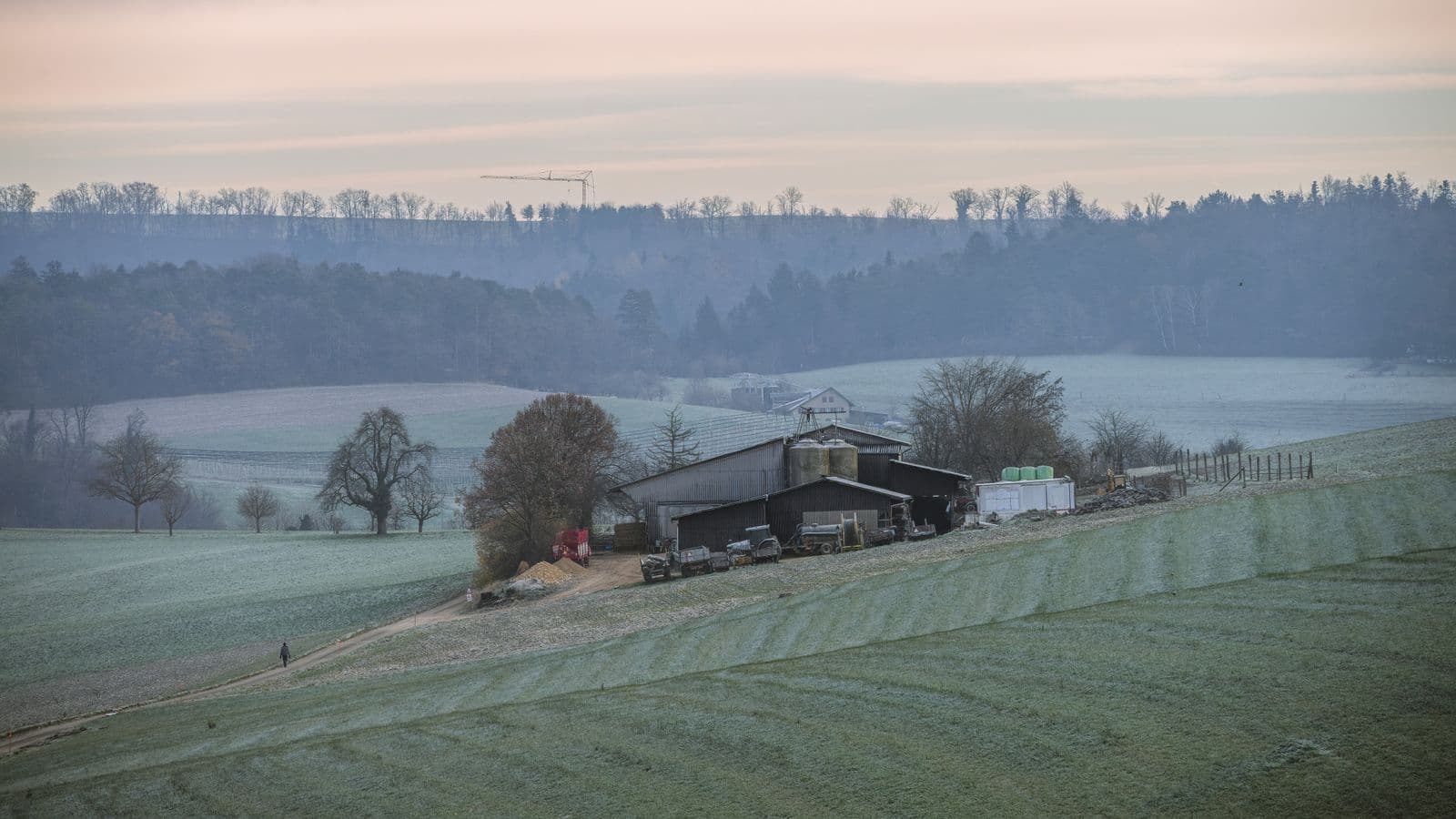
Fallbrook does not have hard winters, but the inland valleys around it get cold enough overnight for propane to behave differently, and rural properties on propane notice it first thing in the morning: a dryer that runs cold, a range burner that lights weakly, a water heater that cannot keep up. The appliances are usually fine. The supply is not. This article explains why cold affects propane and not natural gas, what regulator freezing and low pressure look like, how repeated cold starts wear igniters, how to size a tank for winter demand, and what to inspect before the first cold snap.
Why cold weather affects propane differently than natural gas
Natural gas arrives from the utility as a gas, at regulated pressure, regardless of the weather. Propane arrives at the property as a liquid in a tank and has to boil into a gas before it can reach an appliance. That boiling, called vaporisation, happens at the surface of the liquid, it needs heat, and it takes that heat from the air around the tank.
Propane's boiling point is about -44°F, so it will vaporise on any Fallbrook morning. The issue is rate. A cold tank vaporises more slowly, and a tank that is low has a small liquid surface area, so it vaporises more slowly still. When the demand from a dryer, a range, and a water heater all starting up at 6 am exceeds the rate at which the cold, low tank can produce gas, the pressure drops, and the appliances downstream starve. By midday the tank has warmed and the demand has fallen, and everything works again. The homeowner sees an appliance that fails in the morning and works in the afternoon, which looks exactly like an intermittent appliance fault.
The second difference is water. Propane systems can carry small amounts of moisture, introduced during filling or through a damaged vent, and the pressure drop across a regulator cools the gas sharply. On a cold night that moisture can freeze inside the regulator, restricting or blocking flow until the day warms. Natural gas regulators are not immune, but utility gas is dry and the pressure drops are smaller.
The third is simply that the propane system is on the property and exposed. The tank, the first-stage regulator at the tank, the buried or surface line, and the second-stage regulator at the house are all outdoors in whatever the weather is doing, whereas the natural gas customer's equivalent is under a street.
Regulator freezing and low pressure issues
Low pressure from a cold, low tank and freezing in a regulator produce similar symptoms, and both are supply problems rather than appliance problems. Telling them apart matters because the fix is different.
Low tank pressure shows as weak or intermittent heat across every propane appliance at once, worst in the early morning and improving through the day. The dryer runs but barely warms, or heats for the first few minutes and then runs cold. Range burners light with a low, lazy flame and the oven takes far longer than usual to reach temperature. The water heater runs continuously. The tank gauge reads low, often under 30 percent. The fix is a delivery, and the prevention is keeping the tank fuller through winter.
Regulator freezing shows as a sharper pattern: pressure that is fine one moment and gone the next, or appliances that will not light at all until mid-morning and then work normally. Frost or ice visible on the regulator body is a giveaway, as is a regulator vent that is blocked by an insect nest, debris, or ice, which prevents the diaphragm moving. A regulator that freezes repeatedly has moisture in the system, and the propane supplier needs to address the source, usually by adding methanol at the next fill and checking the regulator and its vent. Pouring warm water on a frozen regulator restores pressure for a morning and solves nothing.
A failing regulator is the third possibility and is not seasonal, but cold exposes it. A second-stage regulator that is sticking or has a tired diaphragm delivers inconsistent pressure that shows most under morning load.
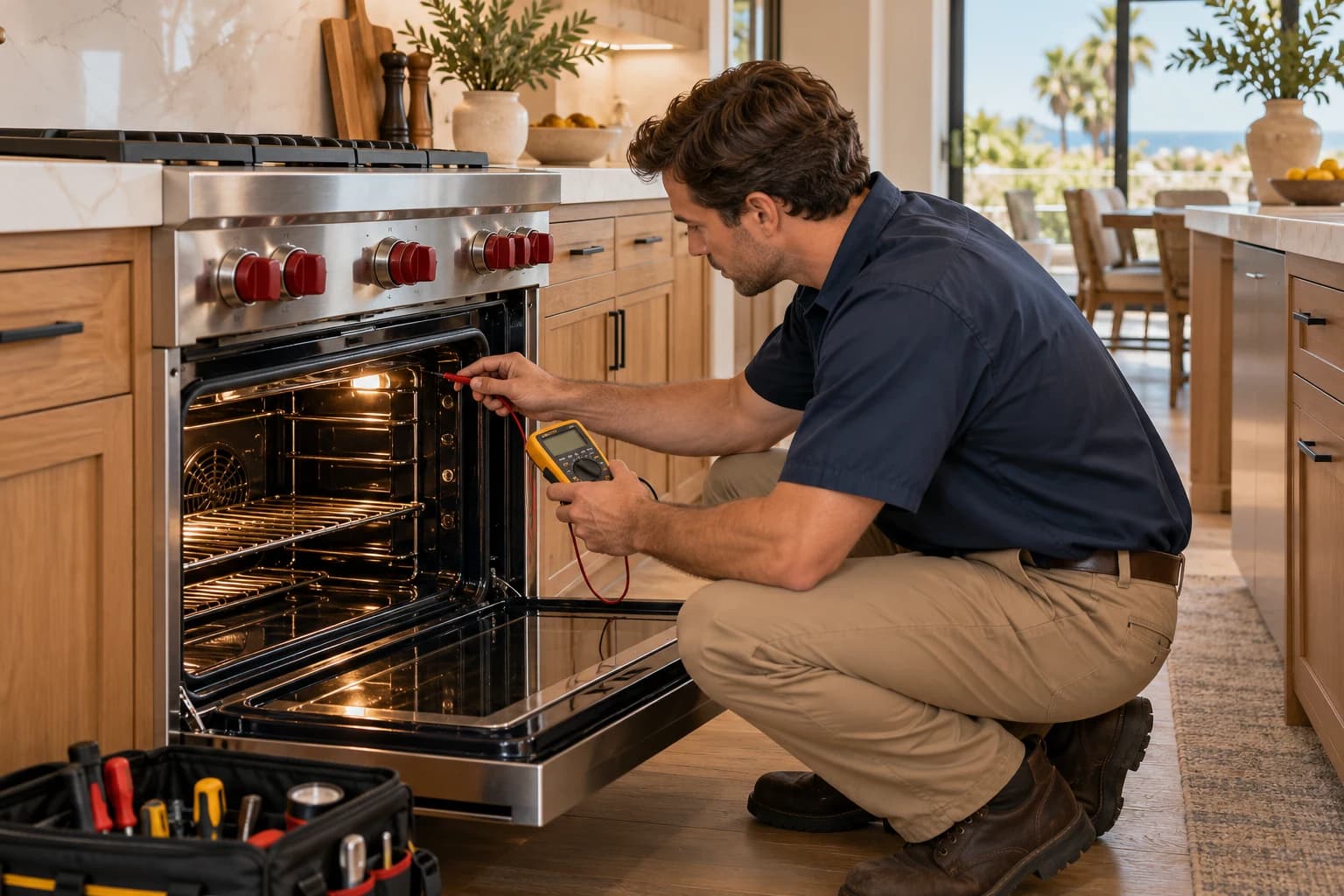
From the appliance side, the way these are separated from a genuine dryer or range fault is to check the supply first. Every propane appliance diagnostic in this service starts with the tank gauge, a look at both regulators and their vents, and a pressure check at the appliance before any part is discussed, because an igniter replaced on a starving dryer fails to solve anything and the customer pays twice. The dryer repair and oven and range repair pages describe the propane-specific diagnostics in more detail.
Igniter stress in cold morning starts
Cold mornings do not damage igniters by themselves. What damages them is what low pressure makes them do.
An oven's glow-bar igniter heats until it draws enough current to open the safety valve, and then gas lights off it. If the supply pressure is low, the valve opens, too little gas arrives, and the burner either fails to light or lights late. The control then cycles: the igniter cools, reheats, the valve reopens, and the sequence repeats until the oven reaches temperature or gives up. A dryer igniter does the same through its own flame sensor. Each of those extra cycles is a full heat-and-cool on a silicon carbide element that is rated for a finite number of them, and a winter of morning cold starts can push an 8-year-old igniter into failure that would otherwise have come a year or two later.
Gas valve coils suffer similarly. A valve held open or cycled repeatedly against inadequate gas flow runs its coils hotter, and coils that are already marginal fail. Late light-offs on a range burner, where gas accumulates for a second or two before catching with a small pop, also deposit soot that fouls spark electrodes and burner ports.
The practical consequences are two. First, if a propane appliance's igniter fails in January, the diagnostic should establish whether the supply contributed, or the new igniter will be stressed in the same way. Second, if an oven or dryer igniter is approaching the end of its 8 to 12 year life going into winter, a pre-emptive replacement during a scheduled visit is cheaper than a same-day call on the first cold morning. Igniter replacement runs $180 to $320 for an oven and $180 to $280 for a dryer, including labour, with propane-compatible parts.
Propane tank sizing and winter demand
Tank size is set when the property is plumbed and is usually not something to change, but how full the tank is kept through winter is entirely within a homeowner's control, and it is the single biggest factor in cold-start problems.
The vaporisation capacity of a tank depends on its liquid surface area and the ambient temperature. A 250-gallon tank at 20 percent on a 35°F morning has a fraction of the capacity of the same tank at 60 percent on a 70°F afternoon. Properties where the propane serves a dryer, a range, a water heater, and perhaps a furnace or generator can have a morning demand that a cold, low tank simply cannot meet, even though the same tank is adequate the rest of the year.
The working rules on rural Fallbrook properties: keep the tank above about 30 percent from December through February rather than the 20 percent that is acceptable in summer; schedule deliveries on a calendar rather than on the gauge, since suppliers get busy in cold snaps; and if a property has had cold-start trouble two winters running with a full tank, talk to the supplier about a larger tank or a second tank manifolded in, which doubles the vaporisation surface. Tanks in full shade on the north side of a building are colder than tanks in sun, and that difference is real on a frosty morning.
Two things do not help. Insulating or covering a tank reduces the heat it can draw from the air and makes vaporisation worse. And heating a tank by any improvised means is dangerous and should never be attempted.
Pre-winter propane appliance inspection
October and November are the time to go through the propane appliances before the first cold mornings, and most of the list is a homeowner's.
- Tank level and schedule. Check the gauge, arrange a top-up to above 60 percent before December, and set delivery reminders.
- Regulator vents. Look at the small vent opening on each regulator. Clear any insect nest, dirt, or spider web, and make sure the vent points downward so water cannot enter. Report any corrosion or a regulator older than its service life to the supplier.
- Flame check. Light every range burner and look at the flame: tight, blue, with distinct inner cones. A yellow, lazy, or lifting flame indicates a pressure or orifice issue that will get worse in the cold.
- Dryer vent. Clean the lint trap, and have the vent cleaned if it has not been done this year. A restricted vent and low morning pressure together are how thermal fuses trip. On rural properties with vegetation exposure, the recommendation is cleaning every 3 to 4 months during fire season.
- Igniter age. If the oven or dryer igniter is original and the appliance is 8 to 12 years old, consider a pre-emptive replacement.
- Carbon monoxide alarm. Test it. Poor combustion from a mis-adjusted propane flame produces carbon monoxide, and cold weather means closed windows.
A professional pre-winter visit covers the same ground with instruments: supply pressure verified at each appliance, igniter current draw measured against specification, flames adjusted, and the vent inspected. The diagnostic is $89, waived with any repair, with a $30 rough-road surcharge for properties beyond paved roads. If a property is also on a private well, the water heater and washer have their own winter-independent issues under well water appliance service. Call (951) 717-8971 and say the appliances are propane when you book, so the technician arrives with propane-rated parts.