Santa Ana winds can make Fallbrook feel like a hair dryer is pointed straight at your house. The air turns hot and dry. Dust shows up on every surface. Tree debris starts moving. If a fire breaks out anywhere nearby, smoke can travel fast.
These winds are a real HVAC stress test. Santa Ana winds are hot, dry down-slope winds in Southern California, and they can bring strong gusts and elevated fire danger. When they hit, your air conditioner has to reject heat into hotter outdoor air, while the outdoor coil gets hammered by dust and debris. At the same time, indoor air quality can drop quickly if smoke is present, which matters for both homes and businesses.
This guide gives you a practical, step-by-step plan to prepare your HVAC system before the next wind advisory. You will learn what actually works, what causes damage, and what to do before, during, and after a Santa Ana wind event.
If you need local help, you can start with Appliance Repair Fallbrook or book service through our contact page.
Why Santa Ana winds hit HVAC systems hard in Fallbrook
Santa Ana conditions create a perfect storm for HVAC trouble:
- Hot outdoor air reduces your AC’s ability to dump heat, so it can feel like the system “can’t keep up.”
- High winds carry dust, leaves, and grit that coat the condenser coil and block airflow.
- Dry air increases static electricity and can aggravate respiratory symptoms when dust levels rise.
- Fire risk rises, and smoke can force you to shift from “cooling mode” to “clean air mode.”
In 2026, this matters more because high-efficiency systems rely on good airflow. A slightly dirty coil or a clogged filter can cause bigger performance losses than you expect.
Santa Ana winds 101 (quick, practical overview)
Santa Ana winds form when high pressure builds over the Great Basin and air flows toward lower pressure near the coast, warming and drying as it descends. The result is hot, very dry, and often gusty wind that can increase wildfire danger and blow debris into outdoor equipment.
For HVAC, you should think of Santa Ana winds as two events:
- A wind and dust event that attacks outdoor equipment and building leakage.
- A potential smoke event that forces you to manage filtration and ventilation.
How Santa Ana winds affect AC performance
You might assume wind helps your outdoor unit cool better. In real life, Santa Ana winds often do the opposite.
Hotter outdoor air reduces cooling capacity
Your AC works by moving heat from inside your building to outside. When the outdoor temperature spikes, the system has to work harder to reject heat. That is one reason your AC can struggle during Santa Ana winds even if nothing “broke.”
Dust and debris reduce heat transfer
Dust coats the condenser coil. Leaves clog the base. Airflow drops. The compressor runs longer. Electric bills rise. Then parts fail.
A Santa Ana event can also pack debris inside the unit cabinet. Once the wind stops, that debris stays there until you remove it. If you ignore it, it keeps blocking airflow and can cause overheating.
Pre-season prep checklist (do this before wind advisories)
If you do these steps once, you will reduce your breakdown risk for the whole season.
1) Lock in the right filter setup
Cal/OSHA guidance for enclosed buildings with mechanical ventilation emphasizes that filters should not be dirty, damaged, dislodged, or leaking around the edges. It also notes that most HVAC systems can accommodate pleated medium-efficiency filters in the MERV 6 to 11 range, and some systems can use MERV 13 or higher, as long as you do not exceed static pressure limits.
Action steps:
- Use a pleated filter that fits snugly.
- Seal bypass gaps if your filter slot allows air to leak around the edges.
- Write the install date on the filter frame so you do not guess later.
If you want to connect indoor comfort to other “silent” performance killers, review our guide on how Fallbrook’s hard water damages appliances (and how to fix it). Hard water can raise operating costs in water heaters, dishwashers, and laundry systems.
2) Clear a 2-foot perimeter around the condenser
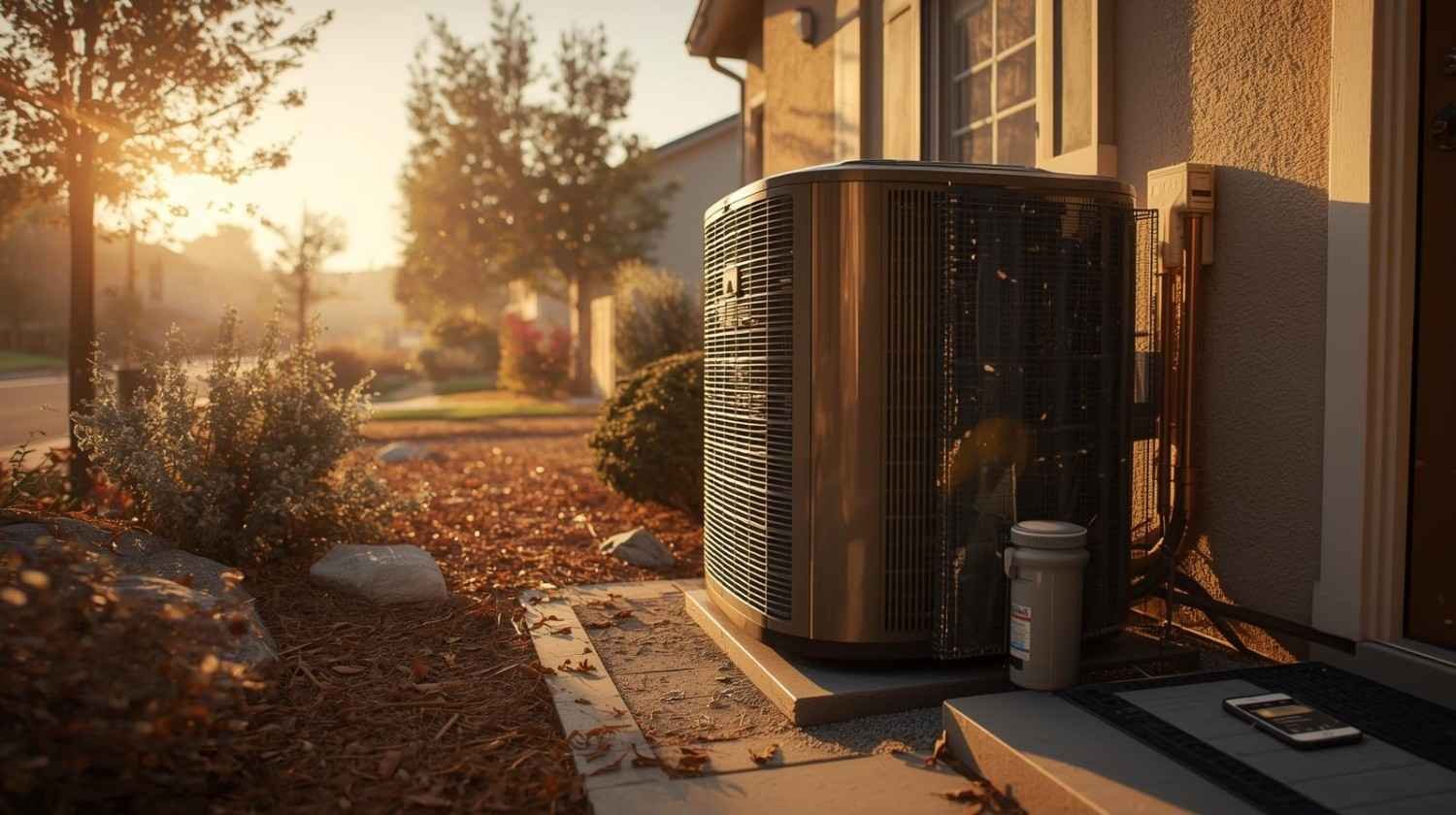
This is simple and it works. Remove weeds, leaves, stacked lumber, and loose yard items near the outdoor unit. After Santa Ana winds, you should clear a two-foot perimeter around the unit to keep airflow open.
Action steps:
- Keep shrubs and vines at least 24 inches away.
- Remove mulch piles near the base that trap debris.
- Avoid storing patio cushions and cardboard near the condenser.
3) Secure outdoor items that become projectiles
High winds turn everyday objects into coil killers. Tie down umbrellas, store lightweight furniture, and secure trash cans.
If your unit sits near trees and you often find leaves inside it, this guide will help you stay ahead of it: protecting outdoor HVAC units from local wildlife and debris.
4) Confirm your system can breathe
Before Santa Ana season starts, do a basic airflow reality check:
- Replace the filter.
- Open supply vents.
- Make sure return grilles are not blocked by furniture.
If the system already runs with weak airflow, dust events push it over the edge.
Outdoor unit protection (what works vs what doesn’t)
Your outdoor condenser is the first thing Santa Ana winds attack. Protect it correctly, or you can make the problem worse.
What works
Gentle coil rinsing after the wind stops
After a Santa Ana event ends, a practical recommendation is to rinse your outdoor unit with a regular garden hose, gently rinsing top to bottom. You also want to spray from inside out if you can access the coil safely, because that pushes debris away from the fins.
Carrier’s coil cleaning guidance also notes that a low-pressure rinse and mild detergent solution can help remove dirt and debris, and it warns that fins bend easily.
Action steps:
- Turn off power at the disconnect.
- Remove loose debris by hand.
- Use a gentle hose spray, not a jet.
- Rinse top to bottom until runoff looks clear.
Keep airflow open, not “wrapped up”
If you use any cover, use breathable mesh that blocks leaves without blocking air. Anything that restricts airflow can cause overheating.
What doesn’t work
Pressure washers
Do not use a pressure washer. Santa Ana dust makes people want to blast the unit clean, but high pressure bends delicate aluminum fins and makes performance worse.
Sealing the unit in plastic
A full wrap traps heat and moisture. It also creates a sheltered space for pests. You want an outdoor unit that stays dry and ventilated.
Indoor air quality game plan (dust, allergens, and smoke)
Santa Ana winds bring dust, but they also raise wildfire risk. If smoke shows up, your plan needs to shift fast.
Use your HVAC system as your first line of defense
Cal/OSHA guidance for enclosed buildings with mechanical ventilation emphasizes keeping windows and doors closed to minimize contamination and making sure HVAC filters are in good condition and fit snugly to prevent bypass.
Action steps for homes and businesses:
- Keep doors and windows closed during dust and smoke events.
- Run the HVAC fan in recirculation if your system supports it.
- Check the filter every few days during heavy smoke or dust.
Choose MERV based on what your system can handle
Cal/OSHA notes that most HVAC systems should be able to accommodate pleated medium-efficiency filters rated MERV 6 to 11, and some can use MERV 13 or higher if pressure limits allow.
Practical guidance:
- If you have older ductwork or weak airflow, start with MERV 8 to 11.
- If you have a newer system and good airflow, ask a technician if MERV 13 is safe.
- If you have respiratory risks or frequent smoke exposure, consider a stand-alone HEPA air cleaner inside the building, which Cal/OSHA also mentions as an option.
Commercial buildings: extra steps for offices, retail, and multi-tenant sites
If you manage a commercial space in Fallbrook or North County, you have extra variables:
- Doors open often, so dust enters faster.
- Occupants complain sooner because comfort is tied to productivity.
- You may have compliance and worker exposure considerations during smoke events.
Action steps:
- Increase filter checks during wind weeks.
- Keep a spare box of filters on-site.
- Consider installing a filter pressure gauge to track loading, which Cal/OSHA suggests can help indicate when filters need replacing in very smoky or dusty areas.
- Check rooftop units for debris and torn insulation after wind events.
If you also want realistic dispatch expectations during high-demand days, read: Emergency AC Repair: average response times in North County.
During the wind event: safe settings and what to avoid
You cannot control the wind, but you can reduce stress on your system.
Do this
- Keep windows and doors closed to reduce dust infiltration.
- Set the thermostat to a steady temperature. Avoid constant up and down changes.
- Use ceiling fans to improve comfort without forcing lower thermostat settings.
Avoid this
- Avoid running the system with a severely clogged filter.
- Avoid trying to “force cool” by setting the thermostat to 60°F. It does not cool faster. It only runs the system longer.
- Avoid opening windows “for fresh air” when smoke is present.
If you get a Flex Alert during the same period, you can still stay comfortable with smarter timing. Use this guide: managing appliance use during Flex Alerts.
After the wind stops: post-event HVAC reset
This is where most people miss the moment that prevents a breakdown.
Step 1: Clear the perimeter and cabinet
Clear a two-foot perimeter around the condenser and remove visible debris.
Step 2: Rinse the outdoor coil gently
Use a garden hose and rinse top to bottom. Do not use a pressure washer. If needed, follow coil cleaning best practices that emphasize low-pressure methods because fins bend easily.
Step 3: Check your filter and airflow
If dust levels were heavy, replace the filter sooner than your normal schedule. Cal/OSHA stresses proper filter fit and preventing bypass as part of protecting occupants from smoke and outdoor pollution.
Step 4: Listen for post-wind damage signs
Call for service if you notice:
- Rattling fan blade
- Clicking or buzzing at startup
- Weak airflow that was not present before
- A burning smell from electrical components
Power outage readiness (PSPS and surge risks)
Santa Ana winds increase fire danger, and utilities may shut off power to reduce wildfire risk. The CPUC explains that utilities can shut off power to prevent catastrophic wildfires under strong winds, heat events, and related conditions, and these shutoffs are called Public Safety Power Shutoffs (PSPS).
How to protect your HVAC when power cuts and returns
One practical recommendation is to unplug sensitive electronics to avoid surge damage when power returns, and to use surge protection where possible.
Action steps:
- Turn your thermostat system switch to OFF during an outage.
- Use a whole-home surge protector if you have frequent outages.
- When power returns, wait 5 to 10 minutes before restarting the AC. This lets voltage stabilize and prevents rapid cycling.
For commercial sites, consider a backup plan for critical loads (servers, medical equipment, refrigeration) and document restart procedures for staff.
Costs, downtime, and ROI (what Santa Ana damage usually costs)
Santa Ana wind damage usually falls into a few categories:
- Coil cleaning and airflow restoration
- Electrical component failure due to heat and long run time (capacitor, contactor)
- Fan motor stress from debris
- Filters loaded early due to dust and smoke
The ROI is simple. A filter change and a coil rinse cost very little. A compressor failure costs a lot. Preventive work saves you downtime and keeps your system efficient during the hottest days.
If you also want guidance on durable equipment choices for our coastal and inland conditions, see: best brands of appliances for coastal and inland California homes.