
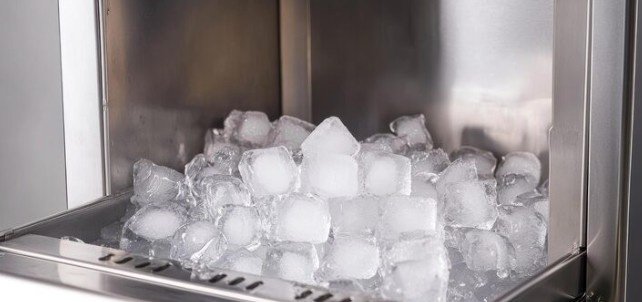
You press the lever for ice. Nothing drops. The bin stays empty day after day. Guests ask for ice, and you buy bags from the store.
Ice makers fail often. A simple fix restarts them in most cases. You just need the right steps.
Appliance Repair Fallbrook diagnoses these weekly. Water lines and filters cause 60% of stops.
This guide lists causes and actions. You get DIY steps with costs. Fix it today.
How ice makers work (key components)
Ice makers fill a mold with water. They freeze it. An arm ejects cubes into the bin. Sensors reset the cycle.
Parts include:
2026 models add sensors for low water or jams.
Cause #1: ice maker turned off or paused
You lift the arm. It stops. Bin full sensor pauses too.
Fix:
Cause #2: frozen fill tube or water line
Freezer below -10°F freezes the tube. No water enters.
Signs: Water dispenses but no ice.
Thaw it:
- Unplug fridge.
- Locate fill tube (back of ice maker).
- Use hair dryer on low (10–15 min).
- Check line for kinks.
Prevent with 0°F freezer. Link our frost buildup guide if freezer ices.
Cause #3: clogged or old water filter
Filters clog after 6 months. Flow drops.
Hard water speeds this in SoCal.
Replace:
Cost: $30–$60.
Cause #4: water supply problems (pressure, kinks, valve)
Pressure below 20 psi fails fill. Kinked lines block flow. Bad valve sticks.
Test:
Valve replace: $100–$200 labor.
Leaks? See our water leak guide.
Cause #5: freezer temperature too high or low
Ice needs 0–5°F. Too high slows freeze. Too low freezes line.
Set it:
Cause #6: faulty ice mold thermostat or motor/module
Thermostat misreads temp. Module fails to eject.
Signs: Arm moves but no eject.
Test with multimeter (pro level). Replace module ($150–$300 parts).
DIY fixes: step-by-step troubleshooting
Follow this order:
- Check basics. Arm down? Bin empty?
- Reset. Unplug 5 min or press reset button.
- Temp check. Thermometer to 0°F.
- Filter swap. Replace if over 6 months.
- Thaw line. Hair dryer if frozen.
- Clean mold. Remove residue with vinegar.
Tools: thermometer, dryer, towels. Fixes 80% of stops.
Repair costs and 2026 trends for ice makers
| Issue | Parts | Labor | Total |
|---|---|---|---|
| Filter | $30–$60 | $0 | $30–$60 |
| Fill tube thaw | $0 | $100 | $100 |
| Inlet valve | $50–$100 | $150 | $200–$250 |
| Module | $150–$300 | $200 | $350–$500 |
| Full assembly | $300–$500 | $250 | $550–$750 |
Ice maker repairs average $250–$400. Smart models rise service 20%.
When to call a pro (vs. replace the ice maker)
Pro if:
Replace assembly if under warranty. Over $400 on 10-year unit? Weigh full replace (our 10-year guide).
Southern California ice maker challenges
Hard water minerals clog filters fast. Heat expands lines (kinks). Power dips freeze tubes.
Beat it:
Our hard water guide details fixes.
Prevention and maintenance plan
Monthly:
- Empty bin. Wipe mold.
Every 6 months:
Yearly:
- Pro check if issues.
Appliance Repair Fallbrook suggests annual service.
Next steps: restart your ice maker
- Run DIY sequence.
- Test 24–48 hours.
- Note model for parts.
- Call if no ice.
We handle ice makers at Appliance Repair Fallbrook. Contact us or visit our site.