Your dryer vent might be the most overlooked safety risk in your entire house. Most homeowners think of a clogged vent as an inconvenience, since it means longer drying times and higher energy bills. The reality is more serious.
A blocked dryer vent is one of the leading causes of house fires in the United States, and the fix is almost always simple, inexpensive, and something you can start addressing today. This guide walks you through the real numbers, how these fires actually start, the warning signs to watch for, and what it takes to keep your home safe.
Why a Clogged Dryer Vent Is More Than a Nuisance
Before you can protect your home, it helps to understand why this specific problem carries so much more risk than other appliance maintenance issues.
What This Guide Covers and Why It Matters to Fallbrook Homeowners
This guide covers the fire science behind dryer vent clogs, the warning signs you can catch early, and the maintenance schedule that keeps your family safe.
We work with homeowners across Fallbrook every year who had no idea their dryer vent posed a real fire risk until something went wrong, and our goal here is to make sure you never end up in that position.
The Difference Between an Inconvenience and a Genuine Fire Hazard
A washer that vibrates or a dryer that takes too long feels like a nuisance you can live with. A clogged dryer vent is different, because the same buildup that slows your drying time is also the exact fuel source that can ignite inside your walls. Treating this as a safety issue rather than a convenience issue changes how seriously you should take it.
The Real Numbers Behind Dryer Vent Fires
The statistics on dryer vent fires are not exaggerated for effect. They come directly from federal fire agencies and paint a clear picture of a preventable but serious risk.
How Many Dryer Fires Happen Each Year in the US
According to the U.S. Fire Administration, residential dryer fires occur an estimated 2,900 times per year across the country. That number represents thousands of households experiencing a fire that, in the vast majority of cases, started with something as simple as trapped lint.
Property Damage, Injuries, and Deaths Linked to Dryer Fires
These fires are not minor incidents. The U.S. Fire Administration estimates dryer fires cause approximately $35 million in property damage annually, along with around 100 injuries and 5 deaths each year. Behind every one of those numbers is a household that assumed their dryer was fine right up until it wasn’t.
Why Failure to Clean Is the Leading Cause, According to NFPA and USFA Data
The National Fire Protection Association has consistently identified failure to clean as the single leading cause of dryer fires, cited in roughly a third of all incidents. This single factor outweighs mechanical failures, electrical faults, or manufacturing defects combined, which means most dryer fires are preventable through basic maintenance alone.
Electric vs. Gas Dryers: Which Poses a Higher Fire Risk
Electric dryers are involved in a disproportionate share of dryer fires compared to gas dryers, and fire investigation research points to the higher heat discharge from electric units as a contributing factor, since it accelerates lint buildup inside the vent system.
If you own an electric dryer, this makes regular vent maintenance even more important. Some brands manage heat more efficiently than others, which is worth factoring in if you’re shopping for a dryer built for the local climate.
How a Clogged Vent Actually Starts a Fire
Understanding the actual mechanism behind these fires makes the risk much easier to take seriously, since it removes any mystery about how something as ordinary as lint becomes dangerous.
Why Lint Is Highly Flammable
Lint is made up of tiny fibers shed from your clothing during the drying process, and those fibers are extremely combustible due to the synthetic materials common in modern fabrics. A small handful of lint can ignite quickly once exposed to enough heat, which is exactly the condition a blocked vent creates.
How Restricted Airflow Causes Heat to Build Up Inside the Dryer
Your dryer is designed to push hot, moist air out through the vent with every cycle. When lint blocks that pathway, the air has nowhere to go, so heat builds up inside the drum and duct instead of escaping.
The heating element keeps cycling on to compensate, which drives internal temperatures well beyond what the dryer normally reaches. If you’ve noticed your dryer needing two full cycles to finish a load, restricted airflow from a clogged vent is very often the underlying cause, and it’s the same mechanism that creates fire risk.
The Ignition Point: When Trapped Heat Meets Packed Lint
Lint ignites at roughly 400 to 450 degrees Fahrenheit, while a properly functioning dryer typically operates between 125 and 135 degrees. That gap normally provides a wide safety margin.
When a vent is severely blocked, though, trapped heat can climb toward that ignition threshold, especially in the section of ductwork packed most densely with lint.
Why This Can Happen Even Without a Spark or Electrical Fault
One of the most important things to understand is that this type of fire does not require a spark, a short circuit, or any electrical malfunction. Heat alone, sustained long enough against packed lint, is enough to cause ignition.
This is why a dryer that seems to be working normally, tumbling, running, producing heat, can still pose a serious risk if the vent behind it is blocked.
Warning Signs Your Dryer Vent Is Dangerously Clogged
Catching these signs early is the difference between a simple cleaning appointment and a much more serious problem down the line.
Clothes Taking Longer to Dry or Coming Out Hot but Damp
If your clothes are coming out of the dryer hot to the touch but still damp, that’s a strong signal that heat is present but moisture has nowhere to escape, which points directly to restricted airflow.
A Burning Smell During or After a Cycle
Any burning smell coming from your dryer deserves immediate attention. This can mean lint is already heating up to a dangerous degree, and you should stop using the dryer until it’s been inspected.
The Dryer or Nearby Wall Feeling Unusually Hot
Place your hand on the dryer’s exterior and the wall behind it during a cycle. If either feels significantly hotter than you’d expect, trapped heat inside the vent system is a likely explanation.
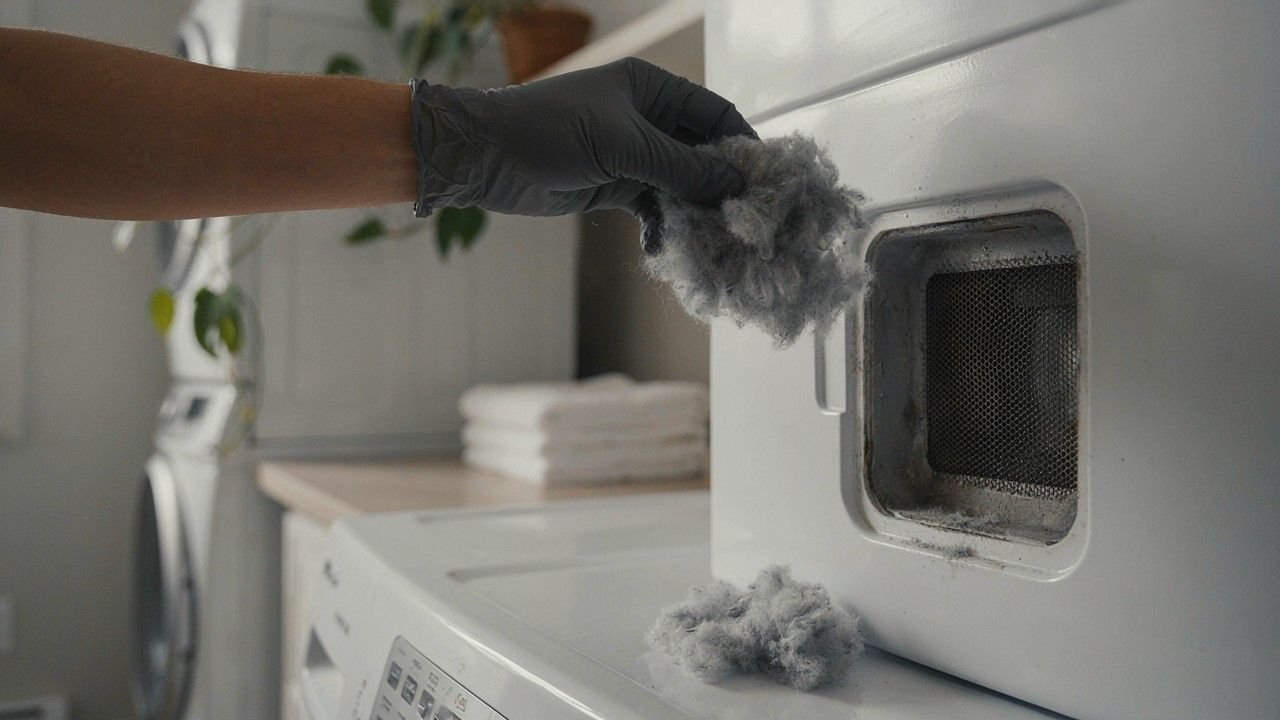
Visible Lint Around the Vent Opening or Excessive Lint in the Trap
Check your outdoor vent opening for visible lint clinging to the cover or accumulating on the ground beneath it. A lint trap that fills up unusually fast between loads is another sign that lint is escaping the trap and building up further down the line.
A Musty or Humid Laundry Room After Every Load
If your laundry room feels noticeably steamy or humid after a normal cycle, moisture that should be venting outside is instead staying trapped inside your home, which is another sign the vent path is restricted.
What Causes Dryer Vents to Clog in the First Place
Knowing what actually causes these blockages helps you understand where to focus your prevention efforts.
Lint Buildup From Everyday Use
Every load of laundry sheds fibers, and even with a clean lint trap, some amount of lint always makes its way further into the duct system over time. This is a normal, unavoidable process, which is exactly why routine cleaning matters.
Long, Winding, or Crushed Vent Runs
The farther air has to travel from your dryer to the outside, the more opportunities lint has to settle along the way. Vents with multiple bends, or sections that have been crushed or kinked behind the dryer, accumulate buildup much faster than a short, straight run.
Flexible Plastic or Foil Ducting (And Why It’s a Known Risk Factor)
Flexible plastic or foil ducting is more prone to sagging, crushing, and trapping lint in its ridges compared to rigid metal ducting. Fire safety research has repeatedly flagged this material as a contributing factor in a meaningful share of dryer vent fires, which is why rigid metal venting is the safer standard whenever it’s practical to install.
Bird Nests and Outdoor Vent Cover Blockages
Outdoor vent openings are an inviting spot for birds and small animals, especially during nesting season, and a nest inside the vent cover can block airflow just as effectively as lint buildup.
Overloading the Dryer and Its Effect on Lint Buildup
Consistently overloading your dryer forces more fabric through the drum at once, which generates more lint per cycle than the trap is designed to fully capture, accelerating buildup further down the vent system.
How Often You Should Clean Your Dryer Vent
Cleaning frequency isn’t one-size-fits-all, and knowing where your household falls on this scale helps you set a realistic schedule.
General Guidance: Every 1 to 2 Years for Most Households
For a typical household, a full professional vent cleaning every one to two years is a reasonable baseline, in addition to clearing the lint trap after every single load.
Signs You Need Cleaning More Often (Large Families, Pets, Long Vent Runs)
Larger families doing more frequent loads, homes with pets that shed heavily, and houses with unusually long vent runs should all consider cleaning on the more frequent end of that range, or even annually.
Adjusting Your Cleaning Schedule for Older Fallbrook Homes
Older homes in Fallbrook often have laundry rooms positioned farther from an exterior wall than newer construction, which means longer vent runs by design. If that describes your home, it’s worth scheduling your professional cleaning closer to once a year rather than stretching to the two-year mark.
DIY Dryer Vent Safety Checks You Can Do Today
You don’t need to wait for a scheduled cleaning to start reducing your risk. A few simple checks take only a few minutes.
How to Inspect the Lint Trap and Exhaust Hose Yourself
Pull the lint trap and clear it completely, then disconnect the flexible hose behind the dryer and check it for visible lint buildup or crushing. This alone catches many early-stage blockages.
How to Check the Outdoor Vent Cap for Blockages
Walk outside and locate your dryer’s exterior vent cover. Confirm the flap opens freely and that no lint, debris, or nesting material is visible around the opening.
What You Can Safely Clean Yourself vs. What Needs a Professional
Clearing the lint trap and the short hose section behind the dryer is safe for most homeowners to handle. Cleaning the full length of duct running through walls or a longer run to the exterior is better left to a professional with the right equipment to reach the entire system safely.
Simple Habits That Cut Fire Risk Between Cleanings
Clean the lint trap before every load, avoid overloading the dryer, and never run a load unattended overnight or while you’re away from home for an extended period. Staying on top of appliance maintenance in general also helps during high-demand periods, like the guidance in our flex alert energy management guide.
Professional Dryer Vent Cleaning: Cost and What to Expect
Professional cleaning is a small investment compared to the risk it eliminates, and knowing what’s included helps you evaluate the service you’re getting.
Average Cost of Professional Vent Cleaning in 2026
Professional dryer vent cleaning typically costs between $80 and $150, depending on the length and accessibility of your vent system. This is a modest cost relative to the fire risk it addresses.
What a Thorough Inspection and Cleaning Actually Involves
A proper service includes clearing the full duct run from the dryer to the exterior vent, checking for crushed or damaged sections, and confirming the outdoor vent cap opens and closes properly.
How Professional Cleaning Differs From Just Clearing the Lint Trap
Clearing the lint trap only addresses the first few inches of a system that can run many feet through your home. Professional cleaning reaches the sections you cannot access yourself, which is exactly where the most dangerous buildup tends to accumulate.
Insurance, Liability, and the Financial Case for Prevention
Beyond the safety argument, there’s a straightforward financial case for staying on top of vent maintenance.
Average Cost of Fire Damage from a Dryer Vent Fire
With average property damage from dryer fires running into the tens of thousands of dollars per incident nationally, the cost of prevention is a small fraction of the potential loss.
If your dryer is already old and showing other signs of wear, it’s worth weighing that against the same repair-or-replace reasoning we use for aging refrigerators.
Does Homeowners Insurance Cover Dryer Fire Damage
Most standard homeowners insurance policies cover accidental fire damage, including fires that originate from an appliance like a dryer. Coverage details vary by policy, so it’s worth confirming your specific terms with your provider.
Why Keeping Maintenance Records Can Matter If You Ever File a Claim
Keeping receipts or records from professional vent cleanings can be useful documentation if you ever need to file an insurance claim, since it demonstrates reasonable maintenance was performed on the appliance involved.
Why Choose a Local Fallbrook, CA Appliance Repair Team
Working with a local team means faster scheduling and technicians who understand the specific vent layouts common to homes throughout this area.
Same-Day Vent Inspections and Cleaning Service
Same-day service means you don’t have to leave a suspected vent hazard unaddressed while you wait for an appointment to open up. It’s part of why homeowners across Fallbrook keep choosing the same local team for safety-related repairs like this one.
Certified Technicians for Electric and Gas Dryers, All Major Brands
Our technicians service electric and gas dryers from all major brands, along with washers and the rest of your kitchen and laundry appliances. If your washer has developed a musty smell alongside your dryer concerns, we can address both in the same visit.
What a Full Safety Inspection Includes
A complete inspection covers the lint trap, the full vent run, and the outdoor vent cap, giving you a clear picture of your fire risk rather than a guess. If it’s been more than a year since your last cleaning, Appliance Repair Fallbrook can get your vent system properly inspected and cleaned. Contact us to schedule your appointment.