If your washer bangs against the wall, rattles the shelf above it, or scoots across the floor during the spin cycle, you are dealing with more than an annoying noise. Left alone, this kind of movement can damage your flooring, loosen hoses, and wear out expensive internal parts faster than normal.
The good news is that most causes are simple to find and even simpler to fix. This guide walks you through every common cause, how to check for it yourself, and what it costs to repair when a technician needs to step in.
Why Your Washer Shakes, Bangs, or Moves Across the Floor
Washers spin at high speeds to remove water from your clothes, and that speed puts real stress on the machine if anything is even slightly off. Understanding what counts as normal versus what signals a problem is the first step to fixing it.
A Little Vibration Is Normal, Walking and Banging Is Not
Some gentle shaking during the spin cycle is expected, especially on older top load models. What is not normal is loud banging, thumping hard enough to move nearby items, or the washer physically shifting position on the floor.
Why This Is a Common Call for Fallbrook Homeowners
We get frequent calls about washer vibration from homes across Fallbrook, right alongside other common washer complaints like musty odors coming from the washing machine. Both issues tend to trace back to a small handful of causes, which we will cover below.
Quick Safety Warning: Stop the Cycle and Unplug Before You Troubleshoot
If your washer is shaking hard enough to move, stop the cycle right away instead of letting it finish. A washer that walks can pull hoses loose or put stress on the power cord, so unplug it before you inspect anything.
Cause 1: Leftover Shipping Bolts
This is the single most common cause of extreme vibration on a newly delivered washer, and it is also the easiest to fix.
Why Shipping Bolts Cause Extreme Vibration if Never Removed
Shipping bolts hold the drum rigidly in place during transport so it cannot shift and cause damage. If they are not removed after installation, the drum cannot move freely on its suspension, which causes intense shaking during the spin cycle.
How to Find and Remove Shipping Bolts (Front Load vs. Top Load)
Front load washers usually have four bolts across the back panel, while top load models vary by brand but often have bolts near the base or back as well. Check your user manual for the exact bolt locations on your model, then remove them with a wrench and keep them in case you ever move the washer again.
Signs You Missed a Bolt After a New Delivery or a Recent Move
If your washer is brand new or was recently moved and shakes violently from the very first cycle, missed shipping bolts are the most likely explanation. This is worth checking before assuming anything else is wrong.
Cause 2: A Washer That Isn’t Level
An unlevel washer is one of the most frequent causes of vibration on machines that have been running fine for a while and then suddenly start shaking.
How to Check if Your Washer Is Level (Spirit Level Method)
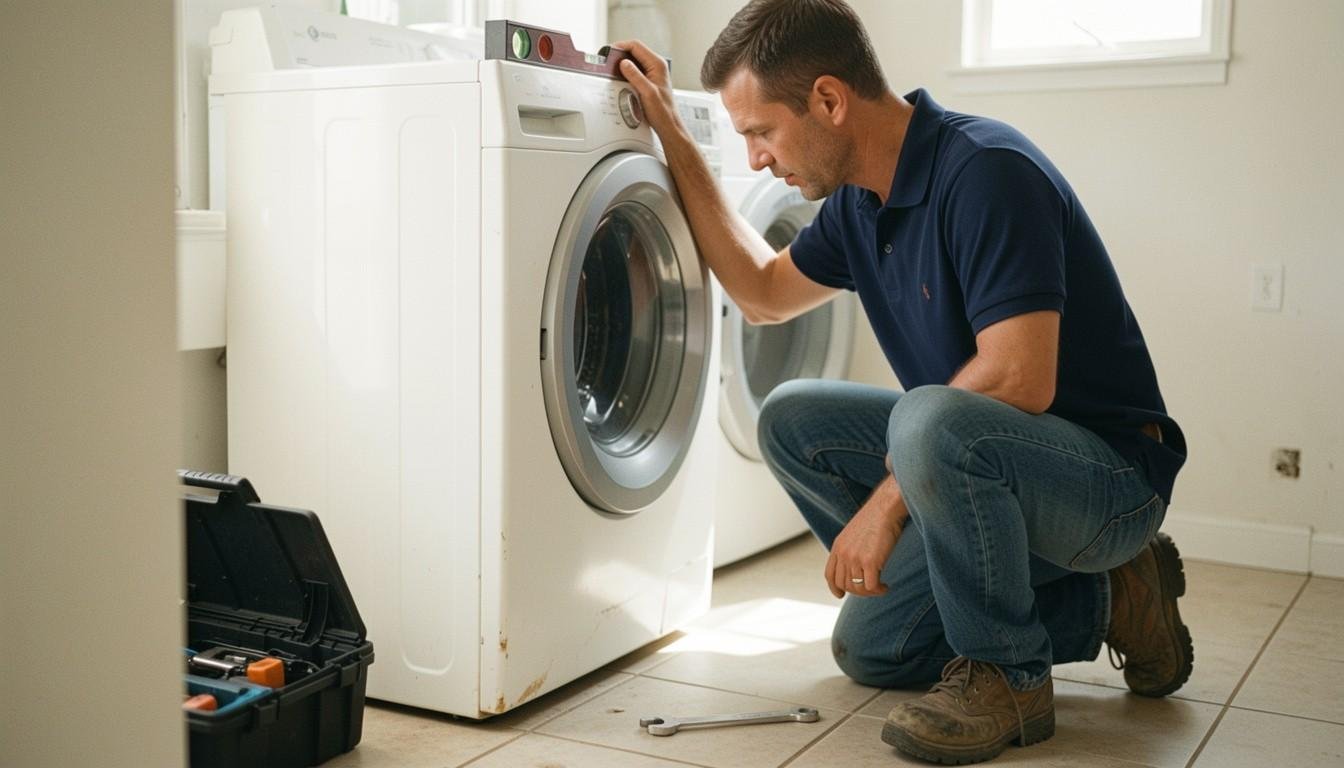
Place a spirit level on top of the washer, check it from side to side and then front to back, and look for the bubble to sit dead center in both directions. If it does not, your washer needs adjustment.
How to Adjust the Leveling Feet Correctly
Turn each leveling foot by hand or with a wrench until the washer sits solid and does not rock when you press down on the corners. Once it is level, tighten the locking nut above each foot so it holds that position during future cycles.
Uneven or Sloped Flooring in Older Fallbrook Homes
Older homes in Fallbrook and the surrounding hill areas sometimes have floors that have settled unevenly over the years, which makes leveling more difficult than on a newer, flatter foundation. In these cases, you may need to check and readjust the feet more often than you would in a newer build.
Cause 3: Unbalanced or Overloaded Wash Loads
Even a perfectly level, properly installed washer will shake if the load inside it is not balanced.
Why a Single Heavy Item Like a Comforter Throws Off the Spin Cycle
Washing one bulky item, such as a comforter or a large towel, on its own often causes it to bunch up on one side of the drum. That uneven weight throws the entire spin cycle off balance and creates strong vibration.
How to Load Your Washer to Prevent Imbalance
Mix heavier items with lighter ones and avoid packing the drum too tightly, since clothes need room to move and redistribute during the cycle. If you are washing a single bulky item, add a few smaller items to help balance the load.
Overloading vs. Underloading: Both Can Cause Vibration
Overloading prevents clothes from moving freely, which creates uneven weight distribution, while a very small load can also shift to one side of the drum during spin. Aim for a load that fills the drum loosely rather than one that is packed tight or nearly empty.
Cause 4: Worn Shocks, Dampers, or Suspension Springs
If you have ruled out bolts, leveling, and load balance and the shaking continues, the suspension system inside your washer may be wearing out.
Front Load Washers: Worn Shock Absorbers and Struts
Front load washers use shock absorbers to control drum movement, and these wear out over years of high-speed spinning. Build quality varies a lot between brands here, and our guide on the best appliance brands for coastal and inland California homes covers which ones tend to hold up longest under regular use. When shocks fail, the drum swings more freely during spin, which causes noticeable banging and vibration.
Top Load Washers: Broken or Stretched Suspension Springs
Top load washers rely on suspension springs to keep the inner basket steady. When a spring breaks or stretches out, the basket can swing loosely inside the cabinet, creating a similar banging effect as worn front load shocks.
How to Tell if Suspension Parts Are Failing vs. Just Old
Suspension components rarely fail all at once. Watch for shaking that has gradually gotten worse over months, along with a loose or bouncy feeling when you press down on the top of the washer cabinet, since these are strong signs the suspension needs replacement.
Cause 5: Worn Tub Bearing or Drum Damage
A failing tub bearing is a more serious mechanical issue, and it usually points to a washer nearing the end of its useful life.
How a Bad Tub Bearing Causes Clattering and Movement
The tub bearing allows the drum to spin smoothly inside the outer tub. When it wears out, the drum develops play and knocks against the tub during spin, creating loud clattering along with vibration and movement.
DIY-Diagnosable vs. Professional-Only Repair
You can often diagnose a bad bearing yourself by listening for a loud grinding or rumbling noise that gets worse as the spin cycle speeds up.
Replacing the bearing itself involves disassembling the drum, which is a job best left to a professional, and it’s the kind of repair that explains why homeowners across Fallbrook keep calling the same appliance repair team rather than attempting it themselves.
Sounds That Tell You It’s the Bearing and Not the Suspension
A worn bearing typically produces a grinding or rumbling sound tied directly to drum rotation, while a suspension issue usually sounds more like banging or thudding as the whole tub shifts. Paying attention to which sound matches your washer helps a technician diagnose the issue faster.
Other Contributing Factors and Quick Fixes Homeowners Often Miss
A few less obvious factors can also cause or worsen vibration, even when the washer itself is in good mechanical shape.
Washer Placement Too Close to Walls, Cabinets, or the Dryer
If your washer sits close enough to a wall or a neighboring appliance to touch during the spin cycle, that contact can amplify vibration and noise. Leave at least an inch of clearance on all sides where possible.
Unanchored Pedestals on Front Load Models
Pedestals raise front load washers to a more comfortable height, but if the pedestal is not securely anchored to both the washer and the floor, the entire assembly can rock or walk during spin. Check that all mounting hardware is tight.
Anti-Vibration Pads: Do They Actually Work?
Rubber anti-vibration pads placed under each foot can help absorb minor vibration and reduce noise, especially on hard flooring like tile or concrete. They are not a fix for a genuinely unlevel washer or a mechanical problem, but they can help once the underlying issue is resolved.
Step-by-Step Troubleshooting Checklist
Before you call for service, run through this quick checklist to rule out the easiest fixes first.
5-Minute Diagnostic Flow (Bolts, Level, Load, Placement)
Check for shipping bolts if the washer is new, confirm it is level with a spirit level, make sure the load is balanced, and check that nothing is touching the cabinet during spin. These four checks resolve the vast majority of vibration complaints.
What to Check If the Problem Only Happens on Spin Cycle
If vibration only shows up during spin and not during wash or rinse, the issue is almost always related to load balance, leveling, or a worn suspension component, since those are the parts under the most stress at high speed.
When Vibration Becomes a Safety Issue (Hoses, Flooring, Electrical)
Stop using the washer if you notice hoses pulling loose, cracked tile or scuffed flooring around the machine, or a power cord under visible strain. These are signs the vibration has already caused damage and needs prompt attention.
If drainage issues have developed alongside the shaking, our guide on the top 4 reasons a washer won’t spin or drain can help you figure out if the two problems are related.
Repair Costs for Vibration and Walking Issues in 2026
Repair costs vary widely depending on whether the fix is a simple adjustment or a full part replacement.
Cost to Level or Adjust a Washer (DIY vs. Service Call)
Leveling a washer yourself costs nothing beyond a few minutes with a spirit level and a wrench. If you call a technician for a simple leveling or bolt removal service, expect to pay a standard diagnostic or service call fee, typically in the $50 to $100 range, and choosing a local company is one small way of supporting local trades in Fallbrook instead of a national chain.
Shock Absorber, Strut, and Suspension Spring Repair Costs
Suspension repairs, including shock absorbers, struts, or springs, generally run between $150 and $350 including labor, depending on the brand and how much disassembly the repair requires.
Tub Bearing Replacement Cost vs. Replacing the Washer
Tub bearing replacement is one of the more expensive washer repairs, often landing between $300 and $500 because of the labor involved in disassembling the drum.
If your washer is older and already showing other signs of wear, it is worth comparing that cost to the price of a new machine, and if you do decide to replace it, our list of local recycling centers for old appliances makes disposal easy.
Preventing Future Vibration and Walking Problems
A few simple habits can prevent most vibration issues from coming back once you have resolved the current one.
Load-Balancing Habits That Protect Your Suspension and Bearings
Get in the habit of mixing load sizes and avoiding single bulky items on their own, since consistent balanced loads reduce wear on the suspension and bearing over the life of the washer.
Routine Leveling Checks After Moving, Deliveries, or Flooring Work
Recheck your washer’s level any time it gets moved, after a new delivery, or after flooring work in your laundry room, since even a small shift in the floor can throw off a previously level machine.
Simple Monthly Habits That Catch Vibration Problems Early
Take a moment each month to press down on the corners of the washer cabinet and listen for new sounds during the spin cycle. Catching a loose bolt, a shifting foot, or an early suspension issue before it worsens can save you from a bigger repair bill later.
If your washer has felt increasingly unstable, it may be a sign it is nearing the end of its service life, and the same reasoning in our refrigerator repair or replace guide applies just as well to an aging washer.
Why Choose a Local Fallbrook, CA Appliance Repair Team
Working with a local team means faster diagnosis and technicians who already understand the installation challenges common to homes in this area.
Same-Day Diagnosis for Washers That Bang, Shake, or Walk
Same-day service means you are not stuck guessing whether it is safe to keep using a shaking washer, and a technician can quickly tell you whether the fix is simple or something more involved.
Certified Technicians for All Major Washer Brands
Our technicians diagnose and repair vibration and walking issues on washers from LG, Whirlpool, GE, Maytag, Speed Queen, and other major brands, along with the rest of your kitchen and laundry appliances.
If your washer is still shaking after working through this checklist, Appliance Repair Fallbrook can take a closer look and get it running smoothly again. Contact us to schedule a diagnostic visit.