You load the dryer, hit start, and everything sounds normal. The drum spins, the motor hums, but forty minutes later your clothes come out just as damp and cold as when you put them in. This is one of the most common dryer complaints homeowners deal with, and it’s also one of the most misdiagnosed.
Three different parts can cause this exact symptom, and replacing the wrong one wastes both time and money. This guide walks you through how to tell them apart, how to test each one yourself, and what repairs actually cost.
Why “No Heat” Isn’t a One-Part Problem
Before you order a replacement part, it helps to understand that “no heat” is a symptom, not a diagnosis. Several components can cause it, and each one fails for a different reason.
The Dryer Tumbles Fine, But Nothing’s Warm: What That Tells You
If the drum turns and the timer counts down normally, you already know the motor and drive system are working. That narrows the problem down to the heating circuit specifically, which includes the heating element or igniter, the thermostats, and the thermal fuse.
Why Homeowners Often Replace the Wrong Part First
It’s tempting to order a heating element right away since it’s the most obvious suspect, but thermostats and thermal fuses cause the exact same symptom and fail more often in many models. Buying and installing the wrong part means paying twice and still not fixing the dryer.
What This Guide Will Help You Diagnose (Electric and Gas Dryers)
This guide covers both electric and gas dryers. The thermostats and thermal fuse work the same way on both types, while the actual heat source differs: electric dryers use a heating element, and gas dryers use an igniter and gas valve.
Some brands are also more prone to premature heating component wear than others, which is worth knowing if you’re comparing options for a dryer built for the local climate.
How Your Dryer’s Heating System Actually Works
Understanding how these parts work together makes it much easier to figure out which one has failed.
The Heating Element (Electric) or Igniter and Gas Valve (Gas)
An electric dryer uses a coiled heating element that warms the air pulled through the drum. A gas dryer instead uses an igniter to light a small burner, with a gas valve controlling fuel flow to that burner. Both serve the same basic purpose: generating the heat that dries your clothes.
The Cycling Thermostat: How It Regulates Heat During a Cycle
The cycling thermostat turns the heat source on and off repeatedly throughout the cycle to keep the internal temperature within a target range. This is a normal part of operation, not a malfunction, and it’s why your dryer’s heat isn’t constant the entire time it runs.
The High-Limit Thermostat and Thermal Fuse: Your Dryer’s Safety Backup
The high-limit thermostat is a safety device that cuts power to the heating element if the cycling thermostat fails to regulate temperature properly. The thermal fuse sits one step further back as a final safeguard, and unlike the thermostats, it does not reset once it trips. A blown thermal fuse must be replaced before the dryer will heat again.
How These Three Components Work Together in a Normal Cycle
In a properly functioning dryer, the heating element or igniter provides heat, the cycling thermostat regulates it, and the high-limit thermostat and thermal fuse stand by, only stepping in if temperatures climb dangerously high. Every one of these components sits in the same heating circuit, which is exactly why more than one can fail from the same underlying cause.
Signs It’s the Heating Element (or Igniter on Gas Dryers)
This is usually the first component homeowners suspect, and there are a few clear signs that point specifically here.
Dryer Tumbles and Runs a Full Cycle, But Air Never Gets Warm
If the dryer runs a complete cycle from start to finish but the air coming through never warms up at all, a failed heating element or igniter is a strong possibility, especially if this happened suddenly rather than gradually.
Gradual Decline: Clothes Take Longer Before Heat Disappears Completely
Sometimes a heating element doesn’t fail all at once. You may notice clothes taking longer to dry over several weeks before the heat disappears entirely, which suggests a coil that’s slowly breaking down rather than a sudden failure elsewhere in the circuit.
Gas-Specific Signs: Clicking Igniter With No Flame
On a gas dryer, listen for a clicking or humming sound as the burner tries to ignite. If you hear that sound but never smell or see any sign of a flame, the igniter itself is a likely cause, though this should be confirmed by a technician rather than inspected directly given the safety risk involved.
Signs It’s a Thermostat, Not the Heating Element
Thermostat issues often look different from a straightforward heating element failure, and knowing the pattern helps you avoid replacing the wrong part.
Inconsistent Heat That Comes and Goes Mid-Cycle
If your dryer heats for a while, stops, then starts again unpredictably, a failing cycling thermostat is a more likely explanation than a dead heating element, since a fully failed element would produce no heat at any point in the cycle.
Dryer Overheats or Shuts Off Early Instead of Running Cold
A thermostat that fails in the opposite direction, staying closed instead of opening, can cause the dryer to overheat and shut down early, sometimes tripping the thermal fuse in the process rather than simply producing no heat.
Why a Stuck Cycling Thermostat Can Cause No Heat at All
A cycling thermostat that fails stuck open tells the heating circuit to stay off permanently, which produces a “no heat” symptom that looks identical to a dead heating element from the outside, even though the heating element itself is perfectly fine.
Signs It’s a Blown Thermal Fuse
The thermal fuse is one of the most commonly overlooked causes of a no-heat dryer, and it behaves differently from either of the other two components.
Why a Blown Fuse Usually Means Zero Heat, No Exceptions
A blown thermal fuse cuts the heating circuit completely and does not partially restore itself. If you’re getting absolutely no heat, with no inconsistency and no gradual decline, a blown thermal fuse deserves an early look.
The Vent Connection: Why Thermal Fuses Blow in the First Place
Thermal fuses exist specifically to protect against overheating, and the most common trigger for that overheating is restricted airflow from a clogged vent. If your dryer’s vent hasn’t been cleaned recently, a blown thermal fuse may be a symptom of that larger issue rather than a random part failure.
Why Replacing the Fuse Without Fixing Airflow Just Blows It Again
Installing a new thermal fuse without addressing the airflow problem that caused it to blow in the first place almost always leads to the same failure again within a short time. Clearing the vent system should happen alongside, not instead of, replacing the fuse.
How to Test Each Part Yourself (Multimeter Basics)
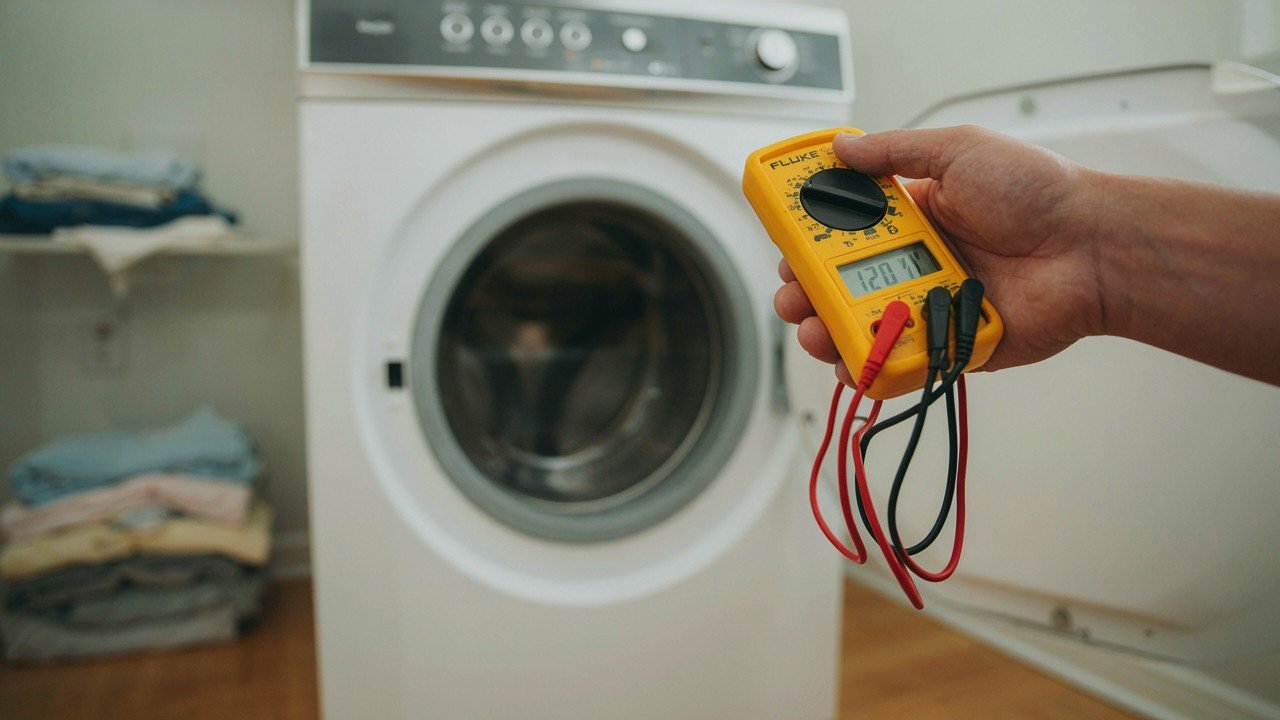
With a basic multimeter and a little patience, you can test all three components yourself before deciding what to order or who to call.
Safety First: Unplugging and Accessing the Back Panel
Always unplug the dryer completely before opening any panel. Most of these components are accessible from the back panel, though some models require removing the front or top depending on design.
Testing the Heating Element for Continuity
Disconnect the heating element’s wiring and touch your multimeter leads to its terminals. A reading showing continuity, typically a low resistance value rather than zero or infinite, indicates the element is intact. No continuity means it has failed.
Testing the Cycling Thermostat and High-Limit Thermostat
Disconnect each thermostat and test for continuity at room temperature. Most should show continuity when cool. If a thermostat shows no continuity at room temperature, it has likely failed and needs replacement.
Testing the Thermal Fuse
Test the thermal fuse the same way, checking for continuity with the fuse disconnected. No continuity confirms the fuse has blown and needs to be replaced, since thermal fuses cannot be reset once tripped.
Reading Your Results: What Continuity Does and Doesn’t Tell You
A part that passes a continuity test is working electrically, but that doesn’t rule out other issues like a grounded heating element or a wiring problem elsewhere in the circuit. If every individual part tests fine but the dryer still won’t heat, the issue may be in the wiring or the control board rather than any single component.
When These Parts Fail Together (And Why That Happens)
It’s more common than you’d think for more than one of these parts to fail around the same time, and there’s usually a clear reason why.
A Blocked Vent Can Take Out Multiple Parts at Once
Restricted airflow drives up internal temperature across the entire heating circuit, which can stress the cycling thermostat, trip the high-limit thermostat, and blow the thermal fuse all in a short window. This is why technicians almost always check the vent system alongside any heating repair.
Why Replacing Only One Part Sometimes Doesn’t Fix the Problem
If you replace a blown thermal fuse but a damaged thermostat or a grounded heating element caused it to blow, the new fuse may blow again quickly, leaving you thinking the repair didn’t work when the real root cause was never addressed.
When a Repeated Failure Pattern Signals a Bigger Issue
If you find yourself replacing the same part more than once within a short period, or replacing multiple heating components back to back, that pattern points to an underlying issue like a blocked vent rather than coincidental part failures.
Repair Costs: Heating Element vs. Thermostat vs. Thermal Fuse (2026)
Costs vary by part and by how much labor is involved in reaching it, but knowing rough ranges helps you plan before calling for service.
Thermal Fuse and Thermostat Replacement Cost
Thermal fuses and thermostats are relatively inexpensive parts, and replacement including labor typically falls on the lower end of dryer repair costs compared to other components.
Heating Element Replacement Cost
Heating elements are a moderate-cost part, and replacement is usually a straightforward repair on most models, though the exact cost depends on your dryer’s brand and how accessible the element is.
Gas Igniter and Valve Solenoid Replacement Cost
Igniter and valve solenoid repairs on gas dryers vary by brand, and because they involve gas components, these repairs should always be handled by a qualified technician rather than attempted as a DIY project.
Why Professional Diagnosis Often Saves Money Versus Guessing
Paying for a single diagnostic visit that correctly identifies the failed part almost always costs less overall than buying and installing parts one at a time through trial and error, especially when multiple components are involved.
DIY Fix vs. Calling a Professional
Some of these repairs are well within reach for a confident homeowner, while others carry real safety risks that make professional service the smarter choice.
Repairs Most Homeowners Can Safely Handle
Testing and replacing a thermal fuse or a thermostat on an electric dryer is a reasonable DIY project for most homeowners comfortable using a multimeter and following manufacturer instructions.
Why Gas Dryer Heating Repairs Should Always Go to a Technician
Igniter, gas valve, and burner assembly repairs involve fuel lines and combustion components, which carry real safety risks if handled incorrectly. These repairs should always go to a licensed technician.
When Repeated Part Failures Mean It’s Time to Replace the Dryer
If your dryer has needed multiple heating-related repairs within a short period, it may be more cost effective to replace it. The same repair-or-replace reasoning that applies to an aging refrigerator works just as well here, and when it’s time to let the old unit go, local recycling centers for old appliances make disposal easy.
Preventing Heating System Failures Going Forward
A little routine maintenance goes a long way toward protecting every component in your dryer’s heating circuit.
Keeping Your Vent Clear to Protect Every Heating Component
Since restricted airflow is the most common root cause behind thermostat and thermal fuse failures, keeping your vent system clear is the single most effective thing you can do to protect these parts. If your dryer has been taking two cycles to fully dry a load, that’s often an early warning sign of the same airflow problem that eventually damages heating components.
Why Fallbrook’s Older Homes See More Repeat Thermal Fuse Failures
Older homes in Fallbrook often have longer vent runs between the dryer and the exterior wall, which gives lint more opportunity to build up along the way. Homes in this category tend to see thermal fuse failures repeat more often unless vent cleaning happens more frequently than the standard schedule.
Simple Habits That Extend the Life of These Parts
Clean the lint trap before every load, avoid overloading the dryer, and schedule a professional vent cleaning at least once a year if your home falls into the longer-vent-run category.
Why Choose a Local Fallbrook, CA Appliance Repair Team
Working with a local team means faster, more accurate diagnosis instead of a guessing game with replacement parts.
Accurate Diagnosis Instead of Guesswork Parts Swapping
A proper diagnostic visit identifies exactly which component failed and why, which saves you from paying for parts that were never the actual problem. Choosing a local company for this kind of work is also one small way of supporting local trades in Fallbrook instead of a national chain.
Certified Technicians for Electric and Gas Dryers, All Major Brands
Our technicians handle heating system repairs on electric and gas dryers from all major brands, along with the rest of your kitchen and laundry appliances, and it’s part of why homeowners across Fallbrook keep choosing the same local team for repairs like this one.
What a No-Heat Diagnostic Visit Includes
A thorough visit includes testing the heating element or igniter, both thermostats, the thermal fuse, and the full vent system, so you get a complete answer instead of a partial fix. If your dryer isn’t heating, Appliance Repair Fallbrook can find the exact cause. Contact us to schedule a diagnostic visit.