You turn on the oven, you can see the igniter glowing right where it should be, and yet the burner never catches. No flame, no heat, just a glowing element and growing confusion. This is one of the more misleading gas oven symptoms, since a visible glow makes it seem like everything is working when it usually isn’t.
This guide walks you through exactly why this happens, what’s safe to check yourself, and when this becomes a job for a professional.
What a Glowing Igniter Actually Tells You
Before you troubleshoot further, it helps to understand what a glow does and doesn’t confirm about your oven’s ignition system.
Glowing Means Power Is Reaching the Igniter, Not That It’s Working Correctly
A glow confirms electricity is flowing through the ignition circuit and reaching the igniter itself. It does not confirm the igniter is getting hot enough to actually do its job, which is the exact gap that causes this confusing symptom.
Why This Specific Symptom Confuses So Many Homeowners
Most people assume that if a part is glowing, it’s functioning. With a gas oven igniter, that assumption is wrong more often than you’d think, since a weak igniter can glow steadily while falling short of the temperature needed to open the gas valve.
A Quick Safety Note Before You Do Anything Else
If you ever smell gas while troubleshooting this issue, stop immediately, turn off the oven, and ventilate the area. We’ll cover this in more detail shortly, but it’s worth stating upfront before you go any further.
How the Gas Oven Ignition Sequence Is Supposed to Work
Understanding the full sequence makes it much easier to see exactly where things are breaking down when the igniter glows but nothing lights.
The Igniter’s Two Jobs: Heating Up and Opening the Gas Valve
A hot surface igniter has two separate jobs. First, it needs to draw enough electrical current to heat up. Second, once hot enough, it needs to trigger the safety valve to release gas so it can ignite that gas immediately.
A weak igniter can complete the first job while failing the second, which is exactly why you can watch it glow steadily and still get nothing from the burner.
The Bi-Metal Safety Valve: Why It Won’t Open Without Enough Heat
The oven’s safety valve contains a bi-metal component that physically warps open once it absorbs enough heat from the igniter. If the igniter never reaches that threshold temperature, the bi-metal never warps enough to open the valve, and no gas reaches the burner at all.
This is a purely mechanical, heat-driven response, not an electronic decision, which is part of why the failure can be so gradual and easy to miss at first.
Why This System Is Designed to Fail Safely, Not Silently
This entire sequence is built around a safety principle: no heat means no gas. Rather than risk gas building up without ignition, the system is designed to simply withhold gas until the igniter proves it’s hot enough to burn it immediately. A glowing-but-not-lighting igniter is this safety system working exactly as intended, even though it feels like a malfunction.
The #1 Cause: A Weak or Aging Igniter
This single component is responsible for the overwhelming majority of cases where homeowners see this exact symptom.
Why an Aging Heating Element Draws Less Current Over Time
As an igniter ages, its heating element gradually weakens and draws less electrical current with each use. Since the amount of current it draws directly determines how hot it gets, a weakened igniter can still glow visibly while drawing significantly less current than a healthy one needs to open the safety valve.
Round vs. Square Igniters: Why the Shape and Amperage Matter
Igniters generally come in round or square designs, and each type operates at a different amperage specification. Installing the wrong type or a generic replacement not rated for your exact oven can cause this same glowing-but-not-lighting symptom even with a brand new part, which is why matching the manufacturer’s exact specification matters more than simply finding a part that physically fits.
Why Igniter Failure Is Almost Always Gradual, Not Sudden
Igniters rarely fail all at once. More often, you’ll notice the oven taking slightly longer to light over several weeks or months before it eventually stops lighting altogether, which is a useful early warning sign if you catch it in time and address it before you’re left without a working oven entirely.
Other Reasons the Igniter Glows but the Burner Won’t Light
While a weak igniter is the most common cause, a few other issues can produce this exact same symptom.
A Failing Safety (Gas) Valve That Won’t Open
In some cases, the igniter itself is perfectly healthy, but the safety valve’s bi-metal component has failed and won’t open even when it receives sufficient heat. This is less common than igniter failure but still worth ruling out, especially if a new igniter doesn’t resolve the issue.
A Loose or Disconnected Igniter Mount
If the igniter has come loose from its mounting bracket, it may still glow but no longer sit close enough to the safety valve to transfer heat effectively. Reattaching it securely sometimes resolves the issue entirely, and it’s one of the few checks in this entire list that costs nothing to try.
Dirty or Blocked Burner Ports
Grease and food debris can build up around the burner ports over time, restricting gas flow even after the valve opens properly. This typically shows up as a weak or uneven flame rather than no flame at all, but it’s worth checking alongside the igniter.
Wiring or Control Board Issues on Newer Electronic Ranges
On newer ranges with electronic controls, a wiring issue or a failing control board can occasionally cause irregular power delivery to the igniter circuit, producing symptoms that look identical to a simple igniter failure.
The Gas Smell Question: When This Becomes a Safety Issue
A glowing igniter with no flame isn’t always just an inconvenience. Sometimes it comes with a real safety concern attached.
Why a Faint Gas Smell Can Happen Even Without a Flame
In some failure scenarios, a small amount of gas can escape before the safety valve fully closes again, which can produce a faint gas odor even though no flame ever appeared. This is different from a normal, brief gas smell during a successful ignition, and knowing the difference matters.
This is the same kind of combustion-related safety awareness we cover in our guide on dryer vent fire risks, where a seemingly small warning sign deserves prompt attention rather than being brushed off.
What to Do Immediately If You Smell Gas
If you smell gas at any point during this troubleshooting process, turn off the oven, do not attempt to relight it, ventilate the room by opening windows, and contact a professional immediately. If the smell is strong or persistent, leave the house and contact your gas utility provider.
Why You Should Never Try to Manually Light a Gas Oven Burner
Never attempt to manually light a gas oven burner with a match or lighter. Modern gas ovens are not designed for manual ignition, and doing so risks a dangerous buildup of unburned gas igniting all at once.
How to Test the Igniter (What’s DIY and What Isn’t)
Some diagnostic steps are safe and simple for a homeowner. Others require tools and expertise most people don’t have on hand.
The Visual Glow Test: What Bright White vs. Dim Orange Tells You
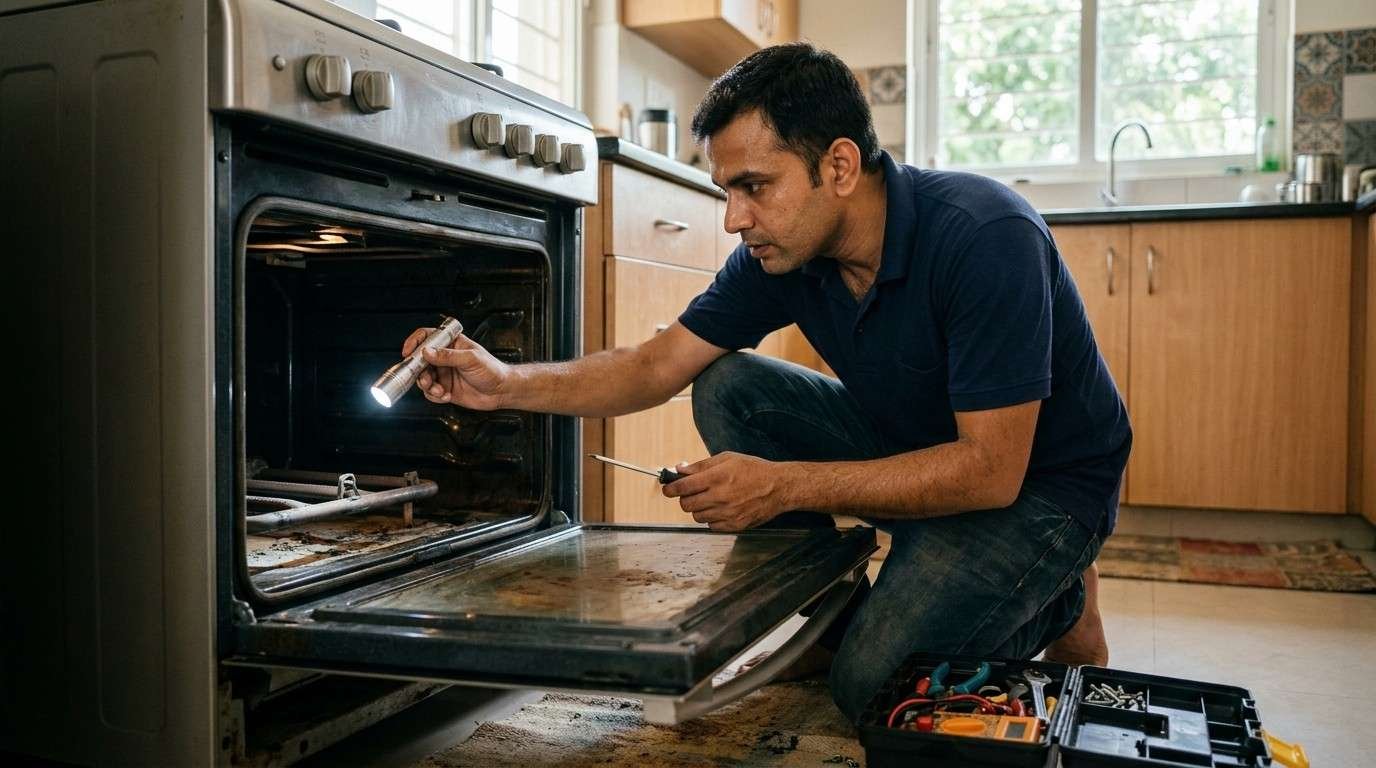
With the oven safely accessible and the burner exposed, a healthy igniter should glow bright white or bright orange at full intensity. If yours glows dim orange or takes noticeably longer than usual to reach full brightness, that’s a strong visual indicator of a weakening igniter.
Why Amp Draw Testing Requires a Clamp Meter and Careful Technique
A definitive diagnosis requires measuring the igniter’s amp draw with a clamp-on multimeter and comparing that reading against the manufacturer’s specification for your exact model. This test requires the oven to be powered and partially disassembled at the same time, which introduces real risk if you’re not familiar with the process.
Why This Is the Point Where Most Homeowners Should Call a Professional
Between the live electrical testing and the proximity to gas components, this is a reasonable point to bring in a professional rather than continuing on your own. A technician can confirm the exact cause in minutes with the right equipment and experience, saving you the guesswork and the risk of testing live components near a gas line yourself.
Repair Costs for a Glowing-but-Not-Lighting Igniter
Knowing what these repairs typically cost helps you plan ahead once the diagnosis is confirmed.
Igniter Replacement Cost
Igniter replacement is generally one of the more affordable common gas oven repairs, since the part itself is inexpensive and the labor involved is usually straightforward for a technician familiar with your model.
This lines up with what we cover in our broader comparison of gas versus electric oven repair costs, where igniter replacement consistently comes in as one of the most common and least expensive repairs across both fuel types.
Safety Valve Replacement Cost (When That’s the Actual Cause)
Safety valve replacement is less common but tends to cost more than a simple igniter swap, since diagnosing a valve issue accurately takes more time and the part itself is generally pricier.
Why an Accurate Diagnosis Matters More Than Guessing the Part
Replacing the igniter without confirming it’s actually the cause means you might pay for a part that wasn’t the problem, only to find the burner still won’t light.
A proper amp draw test before ordering parts avoids this exact scenario, and if your oven is older and has needed several repairs already, it’s worth weighing that against the same repair-or-replace reasoning that applies to an aging refrigerator.
Preventing This Problem From Coming Back
A few simple habits help you catch a weakening igniter before it fails completely.
Keeping Burner Ports and the Igniter Area Clean
Regularly wipe down the burner area and clear any visible debris from the ports, since buildup here can compound an already weakening igniter’s struggle to ignite gas efficiently.
What to Watch for During Routine Oven Use Between Cleanings
Pay attention to whether your oven takes noticeably longer to light than it used to, since this gradual slowdown is usually the earliest sign of a weakening igniter, well before it stops working entirely.
Older gas appliances in particular are worth watching closely, a pattern we’ve seen firsthand in projects like restoring comfort to a historic Fallbrook home, where aging gas systems needed closer attention than their newer counterparts.
When Repeated Igniter Failures Signal a Different Underlying Issue
If you’ve replaced the igniter and the same glowing-but-not-lighting symptom returns within a short time, the safety valve or the control board is worth investigating rather than assuming you simply received a defective part.
Why Choose a Local Fallbrook, CA Appliance Repair Team
Working with a local team means faster, safer diagnosis for a repair that involves both electrical and gas components.
Same-Day Diagnosis for Gas Ovens That Won’t Light
Same-day service means you’re not stuck guessing whether your oven issue is a simple igniter problem or something more involved, and a technician can usually confirm the cause with proper testing equipment on the first visit. Choosing a local company for gas appliance work is also one small way of supporting local trades in Fallbrook instead of a national chain.
Certified, Safety-Trained Technicians for Gas Appliance Repair
Our technicians are trained specifically to handle gas appliance repairs safely, and it’s part of why homeowners across Fallbrook keep choosing the same local team for anything involving gas lines or combustion components.
What a Gas Oven Diagnostic Visit Includes
A thorough diagnostic visit includes an amp draw test on the igniter, a check of the safety valve, and an inspection of the burner ports and wiring, so you get a confirmed answer instead of a guess. If your oven’s igniter is glowing but the burner won’t light, Appliance Repair Fallbrook can find the exact cause safely. Contact us to schedule a diagnostic visit.