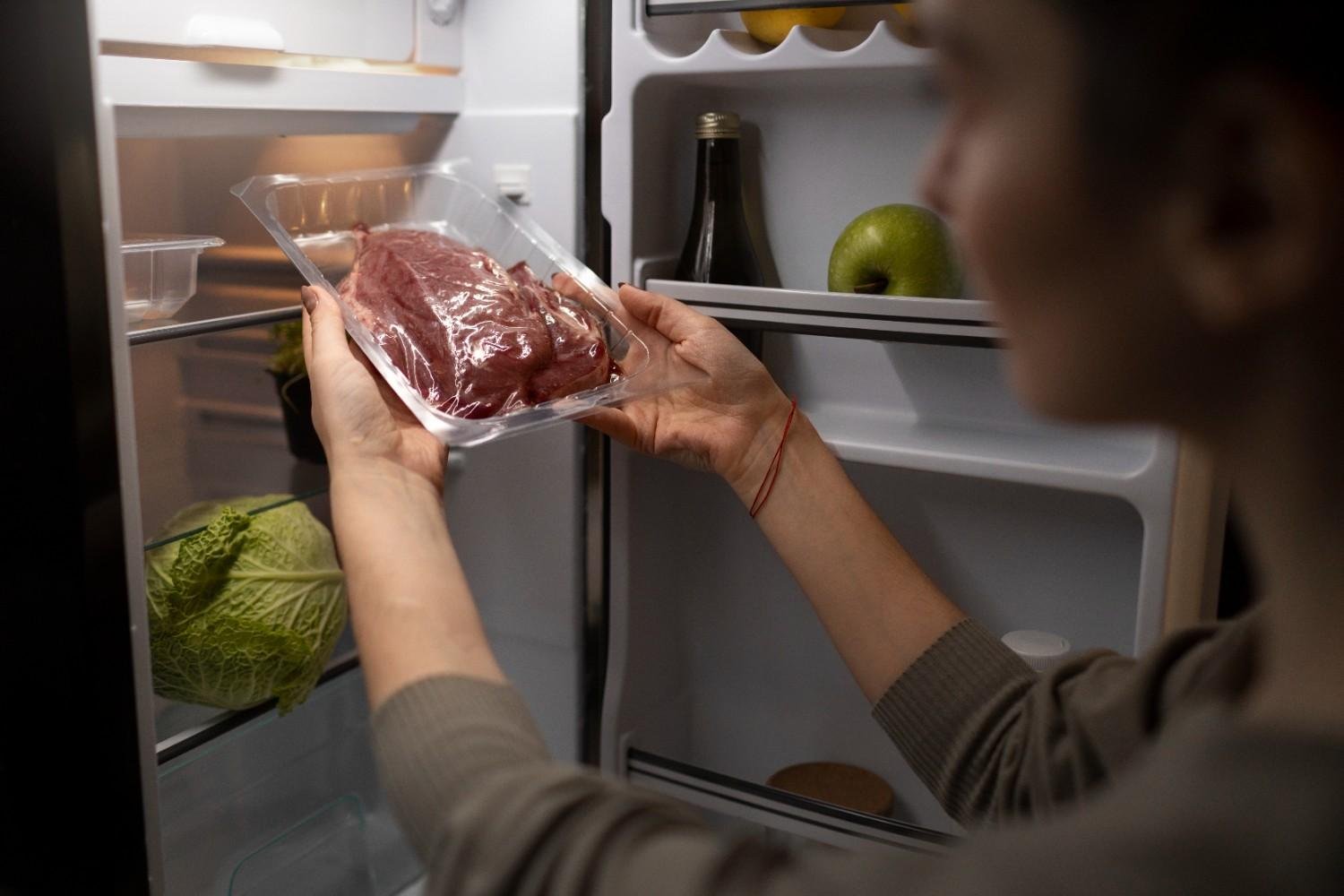
When your fridge stops cooling, food safety becomes a clock. You may have only a few hours before milk, meat, leftovers, and prepared foods move into the danger zone, so you need to act fast and stay organized.
The key rule is simple. Keep the doors closed, check the temperature, protect high-risk foods first, and call for repair if the problem does not clear quickly. FoodSafety.gov, the FDA, and CDC guidance all agree that a closed refrigerator usually keeps food safe for about 4 hours, while a full freezer can hold temperature for about 48 hours.
As a Fallbrook appliance and HVAC repair company, Appliance Repair Fallbrook sees this problem in homes and commercial kitchens every year. The homes that recover best are the ones that know what to keep, what to toss, and when to call for emergency refrigerator repair.
What happens when cooling stops
A refrigerator does not instantly become unsafe the moment the compressor stops. The temperature rises gradually, and that slow rise is what gives you a short window to protect the food.
The danger zone starts at 40°F and goes up to 140°F. Food can enter that range fast in a warm kitchen, especially during a Southern California summer. Once food sits in that range for too long, bacteria can grow much faster.
You should also know that smell and appearance do not tell you if food is safe. Many foods can look fine and still be unsafe after they have sat too warm for too long. That is why the thermometer matters more than your nose.
If your refrigerator is already making noises, running warm, or not cooling at all, you may also want to review our internal guide on what to do when your refrigerator light works but cooling doesn’t. That guide helps you decide whether the problem is a simple setting issue or a real breakdown.
How long food lasts in a fridge breakdown
The short answer is that a closed refrigerator usually keeps food cold for about 4 hours.
A full freezer usually keeps food frozen for about 48 hours if you keep the door closed. A half-full freezer usually keeps food frozen for about 24 hours.
Those timelines matter because the door opens are the biggest source of heat gain. Every time you open the fridge or freezer, warm air rushes in and cold air escapes. That means your food may lose safe temperature much faster than expected.
You should use these timelines as a guide, not a guarantee. A full, well-sealed freezer in a cool room will hold longer than a nearly empty unit in a hot kitchen. A fridge that sits next to a sunny window or an oven can warm faster than one in a shaded room.
If your fridge has seal issues, that problem can shorten the safe window too. You can learn more in our internal guide on common refrigerator seal issues and how they waste energy.
Which foods spoil first
Some foods fail faster than others. You should move these items to the top of your attention list:
- Meat.
- Poultry.
- Seafood.
- Milk and cream.
- Soft cheese.
- Eggs.
- Cut fruit.
- Cut vegetables.
- Leftovers.
- Prepared salads.
- Deli foods.
These foods carry more risk because they support bacterial growth more easily once they warm up. If they sit above 40°F for too long, you should discard them.
If you want a simple rule, use this: if it is moist, protein-rich, or already cooked, it usually spoils faster than shelf-stable food.
Foods that may survive longer
Some items can last longer in a breakdown if they stay cold enough and unopened.
Examples include:
- Hard cheese.
- Butter.
- Condiments.
- Some fresh fruits and vegetables.
- Unopened bottled drinks.
- Frozen foods that still contain ice crystals.
You can often keep frozen food if it still has ice crystals or feels as cold as if it came from the freezer. If it has thawed completely and warmed too much, the safest move is to discard it or cook it right away if food safety guidance allows it.
A lot of people also ask about leftovers. Leftovers are high risk. If they sit above 40°F too long, toss them. Do not guess.
How to check if food is still safe
You should use a thermometer, not guesswork.
Here is the basic method:
- Check the refrigerator temperature first.
- Check the freezer temperature second.
- Look for anything above 40°F in the fridge.
- Look for thawed or soft frozen food in the freezer.
- Use time and temperature together to make the final call.
If your refrigerator has been above 40°F for a while, many perishable foods need to go. If your freezer stayed cold and unopened, you may still save a lot of frozen food.
Do not taste-test food to see if it is safe. Smell, taste, and appearance can all mislead you. The safe decision comes from time and temperature, not from a quick bite.
Emergency actions during a breakdown
Your first move is simple: keep the doors closed.
That one habit buys you the most time. After that, do this:
- Move high-risk food into a cooler with ice packs if you have one.
- Group food together so it stays colder longer.
- Open the fridge only when you need to move food.
- Put a thermometer in the fridge and freezer if you do not already have one.
- If the outage or failure looks long, start planning a food transfer.
Dry ice can help during a longer outage, especially for frozen food, but you should handle it carefully and ventilate the area well. In a home kitchen, a cooler with block ice or gel packs is often easier and safer.
If you already suspect the fridge issue is mechanical, not electrical, you can also use our internal article on strange fridge noises and what buzzing sounds mean to help you narrow the cause.
Action step: Put all critical food into one shelf or one cooler first. That way, you can protect the most important items before you deal with the rest.
What to keep and what to throw out
This is where many people wait too long. A clean decision tree helps you avoid both food waste and foodborne illness.
Usually toss if refrigerated too long
- Raw meat.
- Raw poultry.
- Seafood.
- Milk.
- Cream.
- Soft cheeses.
- Cooked rice.
- Cooked pasta.
- Leftovers.
- Egg dishes.
- Cut produce.
Often safe longer if still cold
- Hard cheese.
- Butter.
- Some condiments.
- Whole fruits and vegetables.
- Sealed drinks.
- Frozen food with ice crystals.
If the fridge stayed under 40°F and the outage was short, some foods may still be safe. If the fridge rose above that point, you should be much stricter with perishables.
If you are dealing with strange water or ice issues at the same time, our guide on why your refrigerator is leaking water can help you separate a food safety issue from a maintenance issue.
When a breakdown becomes a repair emergency
A fridge breakdown becomes an emergency when food safety is at risk, the appliance will not recover temperature, or the cooling problem keeps returning.
You should call for repair quickly if:
- The fridge stays above 40°F.
- The freezer starts thawing.
- The compressor is loud, silent, or constantly cycling.
- You smell burning or see ice buildup.
- The cooling issue happens after a reset.
Acting fast can save food and reduce the chance of larger repair damage. A compressor that runs too long or a fan that fails completely can turn a simple service issue into a more expensive one.
If your fridge is also already old, compare the repair and replacement path. Our internal article on repair or replace a 10-year-old refrigerator gives you a practical way to judge the cost.
Power outage rules versus mechanical failure
The same food safety timeline usually applies to both a power outage and a fridge breakdown.
That means:
- About 4 hours for a closed fridge.
- About 48 hours for a full freezer.
- About 24 hours for a half-full freezer.
The difference is that a mechanical failure often gives warning signs first, such as warm spots, buzzing, or weak cooling. That is where you can save time by calling for service before the food is lost.
For Fallbrook homeowners, summer heat makes both situations worse. You may reach the danger zone faster, so you should act as soon as you see the first signs.
If your fridge has been running warm for days, you may also want to read our internal article on optimal refrigerator settings for Fallbrook’s summer heat. Small setting mistakes can make a failing fridge look worse than it is.
Repair costs, food loss, and real-world risk
A fridge breakdown has two possible costs: the repair bill and the food loss bill. People often focus on the repair bill first, but food loss can be just as painful.
Emergency refrigerator repair costs vary by part and urgency. In 2026, common fridge repair work often lands in the $200 to $1,000 range depending on the issue. A compressor, control board, or fan-related repair can move higher.
Food loss adds another layer:
- A full fridge can hold a lot of groceries.
- A commercial-style household kitchen may store even more.
- A single breakdown can wipe out meat, dairy, leftovers, and prepared meals in one day.
That is why a fast service call often makes more sense than waiting and hoping the unit recovers.
If the fridge has a recurring warm spot or the door seal looks weak, our internal guide on common refrigerator seal issues and how they waste energy can help you catch the issue before it becomes an emergency.
Prevention tips for Fallbrook homes
You cannot stop every breakdown, but you can lower the risk.
Use this routine:
- Clean condenser coils on schedule.
- Check the door seal for gaps.
- Keep the fridge at 37°F and freezer at 0°F.
- Avoid overfilling the cabinet.
- Keep a fridge thermometer in place.
- Watch for buzzing, leaking, or repeated warm spots.
- Call for service at the first sign of cooling loss.
If your home also relies on HVAC heavily during heat waves, keep in mind that a warm kitchen makes fridge recovery harder. Appliance and HVAC problems often show up together in summer. Appliance Repair Fallbrook handles both sides, which helps you fix the root cause faster.
If you want more long-term help for your home, you can also review our pages on top-rated appliance repair in Fallbrook and our contact page when you need a local service call.
Call a local repair pro when timing matters
You should call a local technician if the fridge stays warm, the freezer starts thawing, or your thermometer shows unsafe temperatures after the first few hours.
That is the point where food safety and appliance repair overlap. The faster you act, the more food you save and the lower the chance of bigger damage.
Appliance Repair Fallbrook helps homeowners and commercial customers with refrigerator repair and HVAC repair across the area. If your fridge breakdown needs quick attention, you can reach out through the Appliance Repair Fallbrook homepage or the contact page.